


DragonFlyOfficial

vip
Futures Trading Strategist
Peak Tier 7
Quant Trader
I’m Dragon Fly 6 years trading. I spot clean signals, early trends & moves before they crowd. Join my live calls, ask me anything & trade smart. Together we ride the waves.
Live trade with Dragon Fly Official. BTC falls below $77K, ETH
353 views
2026-05-26 13:07
  • Reward
  • 3
  • Repost
  • Share
ShainingMoon:
To The Moon 🌕
View More
#GatePredictionMarketAddsSmartMoneyTracking
The crypto market is evolving fast, and one of the biggest advantages today is not just having information, but knowing how to follow smart capital before the crowd reacts. That is why the latest upgrade to gate.io⁠� Prediction Market in App v8.20 is such an important step for traders, analysts, and prediction market enthusiasts.
The newly added Smart Money Tracking feature gives users deeper visibility into how experienced and high performing participants position themselves across trending prediction ev
post-image
  • Reward
  • 4
  • Repost
  • Share
ShainingMoon:
To The Moon 🌕
View More
#USStrikesIran
#USStrikesIran
On May 25, the US military carried out what it called “self-defense” airstrikes in southern Iran, targeting missile launch sites and Iranian boats allegedly attempting to place mines near the Strait of Hormuz.
According to US Central Command, the operation was launched to protect American forces and secure one of the world’s most important oil shipping routes.
Reports suggest the strikes focused on areas near Bandar Abbas, a highly strategic naval region for Iran. �
Reuters +1
The situation immediately sent shockwaves across global markets and geopolitical cir
BTC-1.95%
XAU-1.34%
post-image
post-image
  • Reward
  • 9
  • Repost
  • Share
ShainingMoon:
To The Moon 🌕
View More
#StockTradingChallengeUpTo17000U
The market never sleeps, and neither do opportunities for traders who know how to adapt.
The TradingChallengeUpTo17000U more than just a competition.
It is a battlefield where strategy, patience, timing, and discipline decide who walks away with rewards and who learns valuable lessons for the next move.
This challenge brings together three powerful trading tracks including spot trading, futures trading, and CFD trading.
Each category offers a different style of risk management and profit potential, making the event exciting for both beginners and experience
post-image
post-image
  • Reward
  • 9
  • Repost
  • Share
ShainingMoon:
To The Moon 🌕
View More
#TradfiTradingChallenge
Markets are moving fast and TradFi traders are getting some of the biggest opportunities of the year
. From rising Treasury yields and volatile gold prices to AI driven tech stocks and energy sector momentum, every trading session is full of potential setups for disciplined traders
.
This week I focused on risk managed trades around major macro events.
Strong volatility in equities and bonds created opportunities for short term momentum trades while keeping an eye on Federal Reserve signals and inflation expectations
. In TradFi markets, patie
XAUUSD-0.09%
post-image
post-image
  • Reward
  • 15
  • Repost
  • Share
ShainingMoon:
To The Moon 🌕
View More
#SpaceXOfficiallyFilesforIPO
SpaceX IPO Shockwave — The $2 Trillion Mega Listing That Could Transform Global Markets Forever
Wall Street Prepares for One of the Most Important IPOs Ever Attempted
SpaceX has officially entered the public market arena after filing its long-awaited S-1 registration with the SEC, opening the door for what many analysts already describe as the most ambitious and financially explosive IPO in modern history, as the company prepares for a Nasdaq debut under the ticker symbol “SPCX” while reportedly targeting a valuation between $1.75 trillion and $2 trillion alongsi
HighAmbition
#SpaceXOfficiallyFilesforIPO
SpaceX IPO Shockwave — The $2 Trillion Mega Listing That Could Transform Global Markets Forever
Wall Street Prepares for One of the Most Important IPOs Ever Attempted
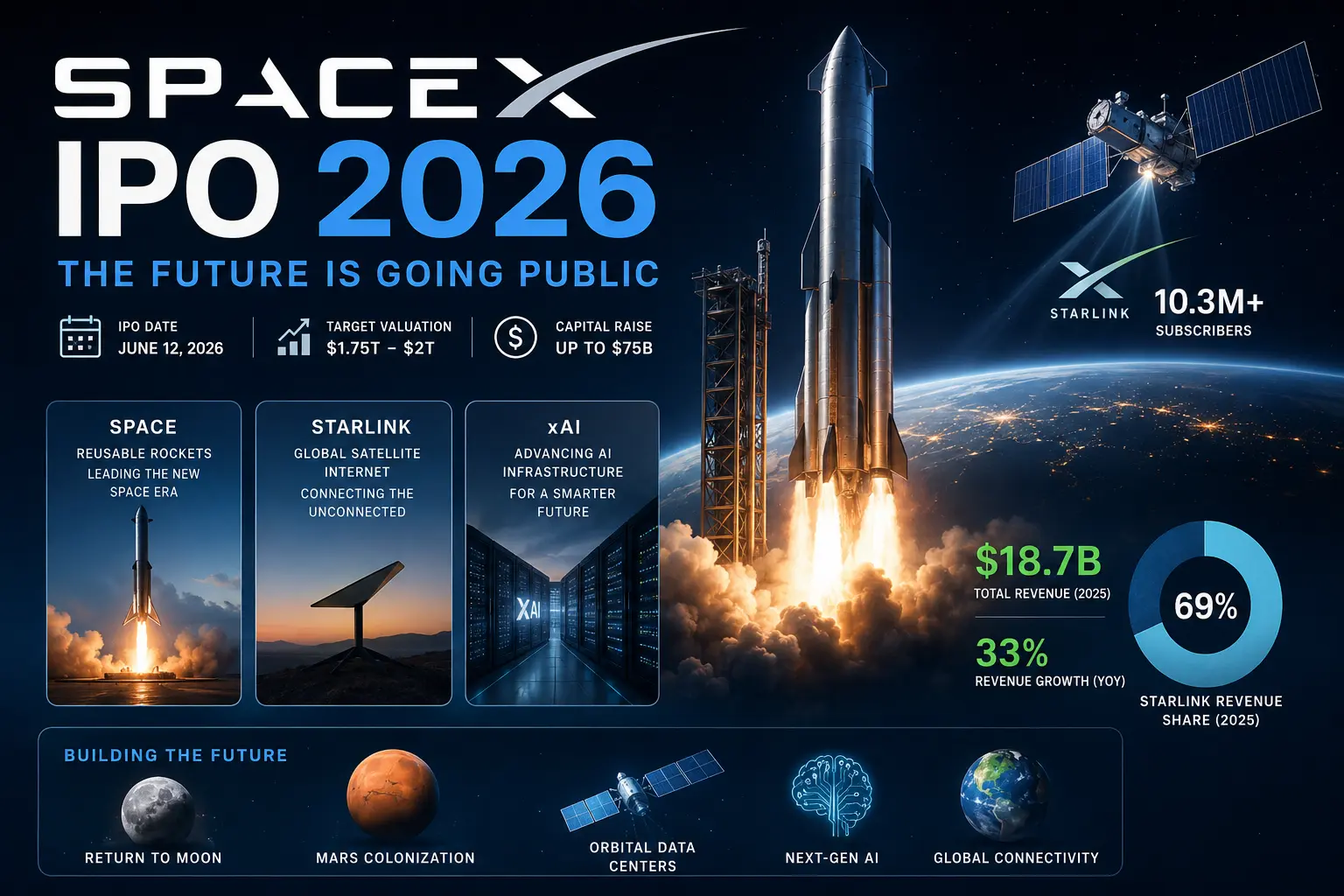
SpaceX has officially entered the public market arena after filing its long-awaited S-1 registration with the SEC, opening the door for what many analysts already describe as the most ambitious and financially explosive IPO in modern history, as the company prepares for a Nasdaq debut under the ticker symbol “SPCX” while reportedly targeting a valuation between $1.75 trillion and $2 trillion alongside a record-breaking capital raise approaching $75 billion, numbers so massive that the listing could instantly reshape global investor sentiment toward artificial intelligence, aerospace technology, satellite infrastructure, and the future digital economy.
no
The market reaction surrounding the announcement has been extraordinary because this is not simply another technology company seeking public funding, but rather a highly complex industrial and technological ecosystem built around rockets, orbital infrastructure, satellite communications, advanced AI systems, and long-term planetary expansion strategies that together form one of the boldest corporate visions ever presented to public investors.
From Experimental Rocket Startup to the Backbone of the Modern Space Economy
Founded in 2002 by Elon Musk, SpaceX originally emerged as a high-risk aerospace startup attempting to reduce launch costs and challenge traditional government-controlled space programs, yet over the past two decades the company has evolved into the dominant force in commercial launch services while simultaneously building one of the world’s fastest-growing communications networks and positioning itself at the center of the rapidly accelerating artificial intelligence revolution.
The company’s reusable rocket technology completely changed the economics of the launch industry by proving that rockets could repeatedly land, relaunch, and operate at scale, allowing SpaceX to dramatically reduce operational expenses while increasing mission frequency through the success of Falcon 9 and Falcon Heavy, achievements that ultimately established the company as the primary launch infrastructure provider for commercial customers, government agencies, military contracts, and satellite deployment programs worldwide.
Starlink Quietly Became the Financial Powerhouse Funding the Entire Vision
Although the company remains globally associated with rockets, astronauts, and Mars ambitions, the strongest financial pillar inside the broader ecosystem is now Starlink, the satellite broadband platform that has expanded into one of the most strategically important communications businesses in the world while generating the recurring revenue needed to finance SpaceX’s increasingly aggressive expansion plans.
Starlink reportedly serves approximately 10.3 million users globally while contributing nearly 69 percent of total company revenue, transforming satellite internet from an experimental concept into a highly scalable global infrastructure business capable of producing billions in recurring annual cash flow while simultaneously extending internet access into underserved regions, remote industrial zones, maritime operations, defense applications, and future mobile connectivity systems.
Financial disclosures connected to the IPO indicate that SpaceX generated approximately $18.7 billion in total revenue during 2025 with annual growth exceeding 33 percent, while Starlink alone contributed close to $13 billion and produced more than $1 billion in quarterly operating profit during Q1 2026, reinforcing investor confidence that the company already possesses a powerful monetization engine capable of supporting larger technological ambitions.
🤖 SpaceX Is No Longer Just a Space Company — It Is Becoming an AI Infrastructure Giant
One of the biggest drivers behind the enormous valuation target is the company’s aggressive push into artificial intelligence infrastructure through xAI, which has become increasingly integrated into the broader SpaceX ecosystem following strategic merger activity involving X, formerly known as Twitter.
Management is now positioning SpaceX as far more than a launch company because the broader corporate strategy increasingly revolves around creating a vertically integrated technological network capable of combining reusable rockets, global satellite communications, advanced AI systems, orbital compute infrastructure, and large-scale data processing operations into one unified platform supporting the next generation of intelligent digital services.
The company believes artificial intelligence represents the largest economic opportunity of the century and estimates that AI-related applications and infrastructure alone could represent more than $26 trillion in future market potential, while the broader combined addressable market involving AI systems, communications infrastructure, broadband connectivity, mobile services, and digital platforms reportedly exceeds $28.5 trillion.
However, the expansion into AI also introduces enormous financial pressure because xAI reportedly generated losses exceeding $6.4 billion during 2025 alongside additional multi-billion-dollar losses during Q1 2026, highlighting the immense spending required to compete against global AI leaders such as NVIDIA and OpenAI in the rapidly escalating battle for compute dominance and next-generation AI capabilities.
Starship Could Become the Most Important Transportation System of the Future
At the center of SpaceX’s long-term strategy stands Starship, the fully reusable next-generation rocket system designed to dramatically reduce the cost of transporting cargo, satellites, equipment, and eventually humans beyond Earth’s atmosphere, while simultaneously enabling entirely new industries that are currently economically impossible under traditional launch economics.
SpaceX believes that reducing transportation costs to orbit could unlock enormous commercial opportunities involving orbital manufacturing, space tourism, lunar infrastructure development, asteroid resource extraction, deep-space logistics, and large-scale orbital AI data centers powered primarily by solar energy, creating an entirely new economic layer above Earth that could eventually support trillion-dollar industries.
The company continues rapidly testing and refining Starship following multiple major flight campaigns because management views large-scale reusable transportation as the critical foundation supporting everything from Starlink deployment to long-term Mars colonization, a vision that remains deeply connected to Elon Musk’s broader objective of establishing a permanent self-sustaining human civilization beyond Earth.
The Mars Vision Is Still at the Heart of the Company’s Identity
Despite the rapid expansion into communications infrastructure and artificial intelligence, the ultimate long-term mission of SpaceX remains centered around making humanity a multi-planetary species, with Mars colonization continuing to serve as the philosophical core of the company’s broader strategy and branding.
One of the most remarkable details linked to the IPO structure involves Musk’s reported performance-based stock awards tied directly to the creation of a permanent Martian settlement containing one million inhabitants, an extraordinary compensation framework that demonstrates how deeply the company’s long-term incentives remain connected to interplanetary expansion rather than short-term financial performance alone.
This long-range vision has become one of the defining elements separating SpaceX from traditional industrial corporations because investors are not merely funding rockets or internet satellites, but rather participating in an attempt to build entirely new technological and economic systems extending beyond Earth itself.
Why Investors Believe SpaceX Could Eventually Justify a $2 Trillion Valuation
Supporters of the IPO argue that SpaceX occupies one of the strongest strategic positions in the modern technology sector because the company simultaneously controls launch systems, satellite manufacturing, communications infrastructure, broadband distribution, reusable transportation technology, and expanding AI operations under one integrated ecosystem that competitors may struggle to replicate efficiently.
Bullish analysts also highlight the company’s dominant market share in commercial launches, expanding government partnerships involving NASA and defense agencies, rapidly scaling Starlink revenues, and the possibility that future orbital compute facilities could eventually reshape the economics of artificial intelligence processing by reducing energy limitations and increasing compute scalability.
Many investors increasingly view SpaceX as a hybrid combination of a telecom giant, aerospace infrastructure provider, AI platform operator, advanced manufacturing company, and future orbital logistics network, creating a corporate structure unlike almost anything previously seen in public markets.
The Enormous Risks Behind the Hype and Valuation
Despite the extraordinary excitement surrounding the IPO, skepticism remains extremely high because the proposed valuation implies revenue multiples rarely seen outside the most aggressively priced technology companies in history, especially considering SpaceX still generates less than $20 billion annually while maintaining enormous operational and infrastructure expenses.
Critics argue that many of the company’s future revenue opportunities including orbital AI infrastructure, deep-space logistics systems, and large-scale Mars colonization projects remain speculative and may require years of additional investment before generating sustainable profitability, while the broader ecosystem involving SpaceX, xAI, and X also creates concerns regarding transparency, operational complexity, and long-term financial clarity.
There is also significant dependence on Elon Musk himself because the broader investment narrative remains deeply tied to his leadership, strategic decision-making, and ability to execute highly ambitious technological projects simultaneously across multiple industries.
Why This IPO Could Become a Defining Financial Event of the Century
The SpaceX IPO represents far more than a traditional stock market debut because it symbolizes a global financial bet on the future convergence of artificial intelligence, orbital infrastructure, reusable transportation systems, advanced communications networks, and interplanetary expansion, with investors effectively wagering that one company can simultaneously dominate multiple foundational industries shaping the next century of technological progress.
If SpaceX successfully commercializes Starship, expands Starlink globally, scales AI infrastructure operations, and establishes orbital compute capabilities at meaningful scale, the company could eventually become one of the most influential corporate entities ever created, yet failure to monetize these futuristic ambitions efficiently could also expose investors to one of the boldest valuation experiments in modern market history.
Regardless of the eventual outcome, the June 2026 IPO already stands as one of the defining moments of the decade because it marks the first time public investors will gain direct exposure to a company attempting to merge space exploration, artificial intelligence, communications infrastructure, and humanity’s long-term expansion beyond Earth into one integrated technological empire.@Gate_Square @Gate广场_Official #GateSquarePizzaDay #DailyPolymarketHotspot
repost-content-media
  • Reward
  • 15
  • 1
  • Share
ShainingMoon:
LFG 🔥
View More
#PlatinumCardCreatorExclusive
Gate Platinum Card — The Moment Crypto Fully Blends Into Real-World Money Systems
The Gate Platinum Card represents more than just another crypto payment product — it represents a structural transition in how money itself is defined in the modern digital economy. For years, crypto existed in a parallel financial universe, separated from traditional banking systems, treated as speculative, volatile, and disconnected from everyday life. But this type of infrastructure begins to collapse that separation entirely, replacing the idea of “crypto vs fiat” with something
BTC-1.95%
ETH-1.88%
HighAmbition
#PlatinumCardCreatorExclusive
Gate Platinum Card — The Moment Crypto Fully Blends Into Real-World Money Systems
The Gate Platinum Card represents more than just another crypto payment product — it represents a structural transition in how money itself is defined in the modern digital economy. For years, crypto existed in a parallel financial universe, separated from traditional banking systems, treated as speculative, volatile, and disconnected from everyday life. But this type of infrastructure begins to collapse that separation entirely, replacing the idea of “crypto vs fiat” with something far more unified: a single, continuous financial layer where value moves without friction across systems, borders, and platforms.
This is not just a product evolution.
This is a financial identity shift.
FROM DIGITAL ASSET STORAGE TO REAL-WORLD SPENDING POWER
The most important transformation introduced by the Gate Platinum Card is not technological — it is functional. Crypto is no longer just something held, traded, or stored for potential appreciation. It becomes directly usable in real-world economic environments through Visa-supported global merchant networks.
That changes everything about how users perceive value:
• Assets are no longer “inactive holdings”
• Crypto is no longer locked inside exchanges
• Financial value becomes instantly deployable ko
When a user can hold BTC, ETH, or stablecoins and immediately use them for daily transactions, the psychological barrier between investment and consumption disappears completely.
Bitcoin stops feeling like an “asset you wait on” and starts feeling like “money you can use anywhere.”
THE GLOBAL FINANCIAL NETWORK EFFECT — WHY THIS MATTERS AT SCALE
The real power of the Gate Platinum Card is not just individual usability — it is network expansion. Every merchant integrated through Visa rails becomes a potential crypto-access point without requiring direct crypto adoption from the merchant side.
This creates a layered financial effect:
• Crypto becomes indirectly accepted everywhere Visa is accepted
• Exchange friction is reduced to near-zero abstraction
• Conversion delays between crypto and fiat disappear in user experience
• Cross-border spending becomes seamless and instant
In practical terms, this means:
A user in Asia, Europe, or the Middle East can hold digital assets and spend globally without traditional banking delays, SWIFT limitations, or currency conversion bottlenecks.
That is not just convenience.
That is infrastructure-level financial compression.
THE DEATH OF “CONVERSION THINKING” IN MONEY FLOW
Traditional finance forces users to constantly think in conversions:
Crypto → Fiat → Bank → Card → Merchant
Each step introduces:
• Time delays
• Fees
• Banking friction
• Psychological separation from asset value
The Gate Platinum Card removes that mental chain entirely.
Instead of conversion, users experience:
“Direct usability of stored value”
This is a massive cognitive shift.
Money stops being something that “moves through systems” and becomes something that “flows naturally.”
That is why this type of product is not just financial innovation — it is behavioral engineering at scale.
FINANCIAL MOBILITY — THE RISE OF BORDERLESS MONEY USERS
A major hidden trend behind this evolution is the rise of globally mobile individuals:
• Remote professionals
• Digital entrepreneurs
• Traders operating across multiple exchanges
• Content creators with multi-currency income streams
• Freelancers paid in crypto or stablecoins
For these users, traditional banking systems are no longer aligned with their lifestyle.
They require:
• Instant settlement
• Multi-asset support
• Cross-border accessibility
• Unified spending systems
The Gate Platinum Card fits directly into this shift by allowing financial identity to move with the user instead of being locked to geography.
CRYPTO IS SHIFTING FROM SPECULATION TO UTILITY-DRIVEN ECONOMY
One of the most important macro signals this card represents is the transition of crypto from speculation to utility.
For years, crypto markets were driven by:
• Trading cycles
• Liquidity waves
• Narrative speculation
• Exchange-driven volume
Now a new layer is emerging:
Real transactional usage
When crypto is used for payments, subscriptions, travel, and daily spending, it introduces continuous demand independent of market speculation.
That creates:
• Organic liquidity demand
• Real-world asset circulation
• Reduced dependency on trading cycles
• Stronger ecosystem stability over time
Utility always builds longer-lasting value structures than speculation.
THE PSYCHOLOGY OF SPENDING CRYPTO — A NEW FINANCIAL BEHAVIOR MODEL
One of the most overlooked transformations is psychological.
Traditional banking teaches users:
• Spending = loss
• Saving = safety
• Consumption = value reduction
Crypto-integrated spending systems change that perception.
When spending is linked with:
• Rewards
• Cashback in digital assets
• Asset appreciation potential
• Portfolio-based financial tracking
Then every transaction becomes part of a larger financial loop instead of a simple expense.
Users start thinking in:
• Value circulation
• Asset velocity
• Portfolio flow
• Net financial movement
This is a fundamental upgrade in financial awareness.
LAYERED FINANCIAL INFRASTRUCTURE — NOT JUST A CARD
The Gate Platinum Card should not be viewed as a standalone product.
It is part of a broader emerging infrastructure stack:
• Crypto exchanges (liquidity layer)
• Stablecoins (settlement layer)
• Visa/Mastercard rails (global acceptance layer)
• Digital wallets (user interface layer)
• Payment cards (execution layer)
When all these layers converge, the result is a fully integrated financial ecosystem where:
value can move instantly from blockchain to real economy without friction
That is the real transformation happening underneat.
IMPACT ON GLOBAL FINANCIAL SYSTEMS
If adoption of such systems continues expanding, long-term implications include:
• Reduced dependence on traditional banking intermediaries
• Increased competition for cross-border payment networks
• Pressure on legacy remittance systems
• Faster capital velocity in global markets
• Blurring boundaries between fiat and crypto economies
This does not replace traditional finance overnight.
But it gradually integrates crypto into everyday economic behavior until separation becomes irrelevant.
FINAL REALITY — THIS IS NOT A PRODUCT EVOLUTION, IT IS A FINANCIAL ERA SHIFT
At the deepest level, the Gate Platinum Card is not simply about spending crypto.
It represents a directional shift in global finance where:
• Digital assets become usable currency
• Payment systems become borderless by default
• Financial identity becomes global rather than local
• Money becomes programmable, mobile, and continuous
The most important transformation is not technological.
It is structural.
And once this structure fully matures, the distinction between “crypto money” and “traditional money” will no longer matter — because the entire system will converge into one unified financial layer.
A layer where money is no longer defined by where it comes from…
But by how instantly it can move.
And how seamlessly it can be used anywhere in the world.@Gate_Square @Gate广场_Official #TradfiTradingChallenge #DailyPolymarketHotspot

repost-content-media
  • Reward
  • 12
  • 1
  • Share
ShainingMoon:
To The Moon 🌕
View More
#PlatinumCardCreatorExclusive
Gate Platinum Card — The Moment Crypto Fully Blends Into Real-World Money Systems
The Gate Platinum Card represents more than just another crypto payment product — it represents a structural transition in how money itself is defined in the modern digital economy. For years, crypto existed in a parallel financial universe, separated from traditional banking systems, treated as speculative, volatile, and disconnected from everyday life. But this type of infrastructure begins to collapse that separation entirely, replacing the idea of “crypto vs fiat” with something
BTC-1.95%
ETH-1.88%
HighAmbition
#PlatinumCardCreatorExclusive
Gate Platinum Card — The Moment Crypto Fully Blends Into Real-World Money Systems
The Gate Platinum Card represents more than just another crypto payment product — it represents a structural transition in how money itself is defined in the modern digital economy. For years, crypto existed in a parallel financial universe, separated from traditional banking systems, treated as speculative, volatile, and disconnected from everyday life. But this type of infrastructure begins to collapse that separation entirely, replacing the idea of “crypto vs fiat” with something far more unified: a single, continuous financial layer where value moves without friction across systems, borders, and platforms.
This is not just a product evolution.
This is a financial identity shift.
FROM DIGITAL ASSET STORAGE TO REAL-WORLD SPENDING POWER
The most important transformation introduced by the Gate Platinum Card is not technological — it is functional. Crypto is no longer just something held, traded, or stored for potential appreciation. It becomes directly usable in real-world economic environments through Visa-supported global merchant networks.
That changes everything about how users perceive value:
• Assets are no longer “inactive holdings”
• Crypto is no longer locked inside exchanges
• Financial value becomes instantly deployable ko
When a user can hold BTC, ETH, or stablecoins and immediately use them for daily transactions, the psychological barrier between investment and consumption disappears completely.
Bitcoin stops feeling like an “asset you wait on” and starts feeling like “money you can use anywhere.”
THE GLOBAL FINANCIAL NETWORK EFFECT — WHY THIS MATTERS AT SCALE
The real power of the Gate Platinum Card is not just individual usability — it is network expansion. Every merchant integrated through Visa rails becomes a potential crypto-access point without requiring direct crypto adoption from the merchant side.
This creates a layered financial effect:
• Crypto becomes indirectly accepted everywhere Visa is accepted
• Exchange friction is reduced to near-zero abstraction
• Conversion delays between crypto and fiat disappear in user experience
• Cross-border spending becomes seamless and instant
In practical terms, this means:
A user in Asia, Europe, or the Middle East can hold digital assets and spend globally without traditional banking delays, SWIFT limitations, or currency conversion bottlenecks.
That is not just convenience.
That is infrastructure-level financial compression.
THE DEATH OF “CONVERSION THINKING” IN MONEY FLOW
Traditional finance forces users to constantly think in conversions:
Crypto → Fiat → Bank → Card → Merchant
Each step introduces:
• Time delays
• Fees
• Banking friction
• Psychological separation from asset value
The Gate Platinum Card removes that mental chain entirely.
Instead of conversion, users experience:
“Direct usability of stored value”
This is a massive cognitive shift.
Money stops being something that “moves through systems” and becomes something that “flows naturally.”
That is why this type of product is not just financial innovation — it is behavioral engineering at scale.
FINANCIAL MOBILITY — THE RISE OF BORDERLESS MONEY USERS
A major hidden trend behind this evolution is the rise of globally mobile individuals:
• Remote professionals
• Digital entrepreneurs
• Traders operating across multiple exchanges
• Content creators with multi-currency income streams
• Freelancers paid in crypto or stablecoins
For these users, traditional banking systems are no longer aligned with their lifestyle.
They require:
• Instant settlement
• Multi-asset support
• Cross-border accessibility
• Unified spending systems
The Gate Platinum Card fits directly into this shift by allowing financial identity to move with the user instead of being locked to geography.
CRYPTO IS SHIFTING FROM SPECULATION TO UTILITY-DRIVEN ECONOMY
One of the most important macro signals this card represents is the transition of crypto from speculation to utility.
For years, crypto markets were driven by:
• Trading cycles
• Liquidity waves
• Narrative speculation
• Exchange-driven volume
Now a new layer is emerging:
Real transactional usage
When crypto is used for payments, subscriptions, travel, and daily spending, it introduces continuous demand independent of market speculation.
That creates:
• Organic liquidity demand
• Real-world asset circulation
• Reduced dependency on trading cycles
• Stronger ecosystem stability over time
Utility always builds longer-lasting value structures than speculation.
THE PSYCHOLOGY OF SPENDING CRYPTO — A NEW FINANCIAL BEHAVIOR MODEL
One of the most overlooked transformations is psychological.
Traditional banking teaches users:
• Spending = loss
• Saving = safety
• Consumption = value reduction
Crypto-integrated spending systems change that perception.
When spending is linked with:
• Rewards
• Cashback in digital assets
• Asset appreciation potential
• Portfolio-based financial tracking
Then every transaction becomes part of a larger financial loop instead of a simple expense.
Users start thinking in:
• Value circulation
• Asset velocity
• Portfolio flow
• Net financial movement
This is a fundamental upgrade in financial awareness.
LAYERED FINANCIAL INFRASTRUCTURE — NOT JUST A CARD
The Gate Platinum Card should not be viewed as a standalone product.
It is part of a broader emerging infrastructure stack:
• Crypto exchanges (liquidity layer)
• Stablecoins (settlement layer)
• Visa/Mastercard rails (global acceptance layer)
• Digital wallets (user interface layer)
• Payment cards (execution layer)
When all these layers converge, the result is a fully integrated financial ecosystem where:
value can move instantly from blockchain to real economy without friction
That is the real transformation happening underneat.
IMPACT ON GLOBAL FINANCIAL SYSTEMS
If adoption of such systems continues expanding, long-term implications include:
• Reduced dependence on traditional banking intermediaries
• Increased competition for cross-border payment networks
• Pressure on legacy remittance systems
• Faster capital velocity in global markets
• Blurring boundaries between fiat and crypto economies
This does not replace traditional finance overnight.
But it gradually integrates crypto into everyday economic behavior until separation becomes irrelevant.
FINAL REALITY — THIS IS NOT A PRODUCT EVOLUTION, IT IS A FINANCIAL ERA SHIFT
At the deepest level, the Gate Platinum Card is not simply about spending crypto.
It represents a directional shift in global finance where:
• Digital assets become usable currency
• Payment systems become borderless by default
• Financial identity becomes global rather than local
• Money becomes programmable, mobile, and continuous
The most important transformation is not technological.
It is structural.
And once this structure fully matures, the distinction between “crypto money” and “traditional money” will no longer matter — because the entire system will converge into one unified financial layer.
A layer where money is no longer defined by where it comes from…
But by how instantly it can move.
And how seamlessly it can be used anywhere in the world.@Gate_Square @Gate广场_Official #TradfiTradingChallenge #DailyPolymarketHotspot

repost-content-media
  • Reward
  • 16
  • 1
  • Share
ShainingMoon:
2026 GOGOGO 👊
View More
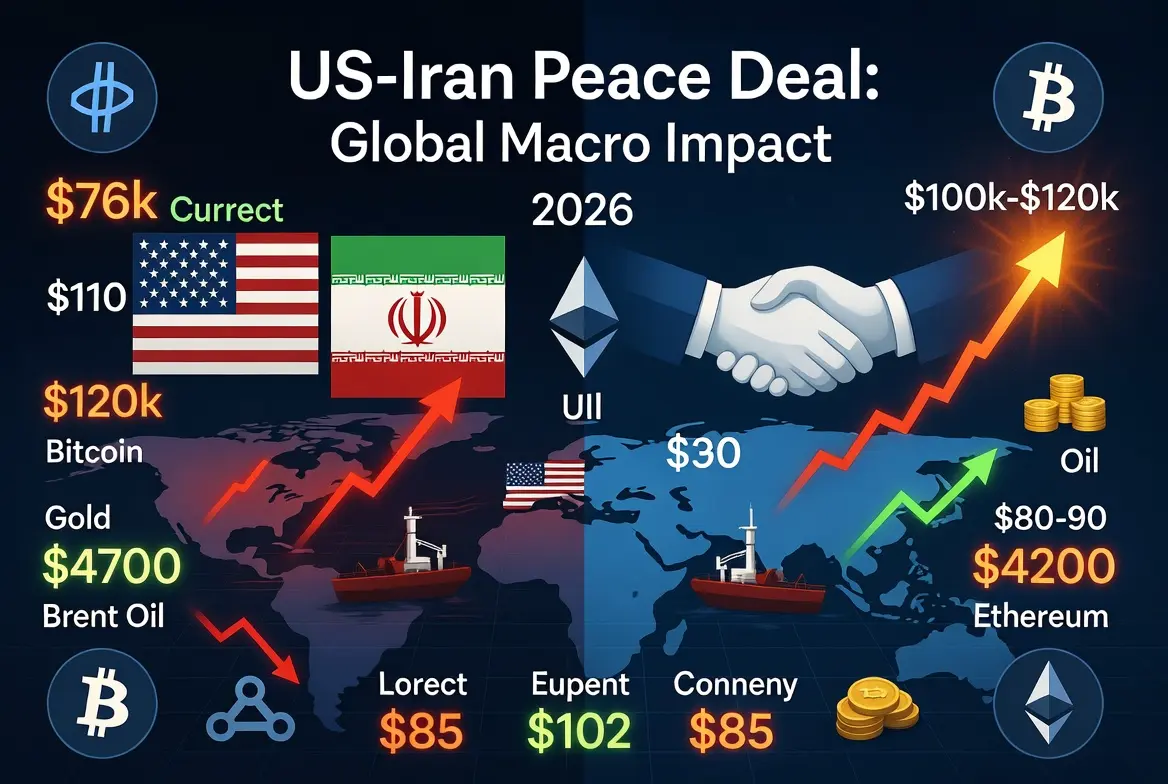
#USIranDraftDeal
The United States and Iran are currently negotiating a landmark draft peace agreement that could fundamentally reshape global financial markets. This agreement, mediated by Pakistan with involvement from Oman and other regional stakeholders, represents one of the most significant geopolitical developments of 2026.
The draft deal emerged after months of intense negotiations following a prolonged period of military escalation that began in early 2026. That conflict disrupted global supply chains, increased energy volatility, and triggered large-scale institutional risk realloca
HighAmbition
#USIranDraftDeal
The United States and Iran are currently negotiating a landmark draft peace agreement that could fundamentally reshape global financial markets. This agreement, mediated by Pakistan with involvement from Oman and other regional stakeholders, represents one of the most significant geopolitical developments of 2026.
The draft deal emerged after months of intense negotiations following a prolonged period of military escalation that began in early 2026. That conflict disrupted global supply chains, increased energy volatility, and triggered large-scale institutional risk reallocation across commodities and digital assets.
This transition from conflict to potential stabilization is now acting as a global macro inflection point, shifting markets from geopolitically driven pricing models back toward liquidity-driven and interest-rate-driven structures.
Expanded Geopolitical Context
The strategic importance of this agreement is centered on three pillars:
Strait of Hormuz reopening
Controls nearly 20% of global oil flow and remains the most critical energy chokepoint in the world. Any disruption here immediately impacts global inflation expectations, shipping insurance premiums, and energy security strategies of major economies including the US, EU, and China.
A reopening would:
Normalize global oil shipping routes
Reduce freight and insurance costs significantly
Restore predictable supply chains for Asia and Europe
Remove a major tail-risk from energy markets
Sanctions restructuring on Iran
Iran’s gradual reintegration into global oil markets would represent a structural supply-side shift.
Increased Iranian crude exports
Gradual compliance-based sanctions easing
Redistribution of OPEC+ influence
Potential competitive pressure on other oil producers
This could reshape medium-term global energy pricing dynamics.
Nuclear program constraints
The nuclear component remains the most sensitive geopolitical pillar.
Long-term verification mechanism
Restrictions on enrichment levels
International monitoring expansion
Reduction in escalation probability between major powers
This reduces the probability of future military escalation cycles, which historically act as volatility triggers across all asset classes.
Overall, this creates a transition from an “energy shock regime” to a controlled geopolitical equilibrium phase.”
Impact on Cryptocurrency Markets
Bitcoin Market Structure
Bitcoin continues to function as the global macro risk indicator for liquidity, sentiment, and institutional positioning.
Peak cycle highs: $110,000+
Conflict-driven low: ~$75,000
Current consolidation: $78,000 – $80,000
Bitcoin’s behavior in this cycle shows a hybrid identity:
Part risk-on asset (like tech equities)
Part geopolitical hedge asset (like gold during crisis periods)
Key Drivers of Crypto Reaction
Bullish structural drivers:
Reduction in geopolitical uncertainty improves institutional risk appetite
Lower oil prices reduce global inflation pressure
Increased probability of central bank rate cuts
Continued ETF inflows and custody adoption
Strengthening institutional infrastructure (pensions, funds, sovereign exposure)
Bearish structural drivers:
Reduced sanctions-related demand for Bitcoin as alternative settlement rail
Short-term capital rotation into equities after risk normalization
Profit-taking after conflict-driven volatility expansion
Liquidity redistribution across traditional markets
Ethereum & Altcoins
Ethereum remains strongly correlated to Bitcoin but shows higher sensitivity to liquidity cycles.
Ethereum range: $2,300 – $2,600
Layer-1 ecosystems remain dependent on liquidity expansion
DeFi activity stabilizes but does not yet expand aggressively
Stablecoins continue growing as global settlement infrastructure
Stablecoins are increasingly functioning as:
Cross-border liquidity tools
Inflation hedges in emerging markets
On-chain dollar exposure instruments
Updated Crypto Scenario Matrix
Bull case: $120K – $150K
Driven by liquidity expansion, ETF inflows, and macro easing cycle
Base case: $90K – $110K
Consolidation phase with moderate institutional accumulation
Bear case: $70K – $75K
Risk-off scenario if geopolitical deal collapses or Fed tightens unexpectedly
Gold Market Deep Analysis
Gold is transitioning from a pure crisis hedge into a structural monetary asset supported by long-term macro forces.
Price Structure
Peak: $4,850/oz
Current range: $4,650 – $4,800/oz
Futures: ~$4,713/oz
Gold remains historically elevated due to:
Persistent central bank accumulation
Global debt expansion
De-dollarization trends
Long-term inflation anchoring
Key Structural Forces
Downward pressures:
Declining geopolitical risk premium
Stronger US dollar in normalization phase
Reduced emergency hedge demand from institutions
Capital rotation into risk assets
Upward structural support:
Central banks increasing reserve diversification
Emerging market demand growth (Asia, Middle East)
Persistent fiscal deficits in major economies
Long-term distrust in fiat currency stability
Institutional Forecast Band
JPMorgan: $5,243/oz revised average
ANZ: $5,600/oz long-term target
Barclays: $5,000 – $5,400/oz range
Gold is therefore not expected to collapse even in peace scenarios, but rather to reprice into a higher structural equilibrium zone.
Oil Market Structural Reset
Oil remains the most geopolitically sensitive commodity and acts as the immediate transmission channel for global inflation shocks.
Current Market Structure
Brent peak: $105 – $110/bbl
Post-deal adjustment: ~$98 – $102/bbl
Current equilibrium: ~$98.80/bbl
Key Mechanism Shift
The peace agreement trig
gers:
Removal of war-risk premium (~$5–$10 per barrel)
Stabilization of shipping through Strait of Hormuz
Reduction in insurance and freight volatility
Expectations of increased Iranian supply output
This results in a rapid repricing of short-term crude futures.
Energy Market Transition Phase
Even after peace is confirmed, oil markets adjust slowly due to:
Global tanker routing delays (30–90 days)
Strategic inventory rebalancing
Refinery throughput adjustment cycles
OPEC+ policy reassessment lag
Thus, oil stability is delayed even after geopolitical resolution.
Oil Scenarios
Bull case: $110 – $115
(OPEC cuts + global demand surge + supply lag)
Base case: $95 – $105
(gradual normalization and supply recovery)
Bear case: $85 – $90
(oversupply risk if Iranian exports ramp quickly)
Macro Liquidity & Fed Policy Impact
The US–Iran agreement has indirect but powerful monetary implications.
Transmission Chain:
Oil price decline → lower inflation (CPI)
Lower inflation → higher probability of Fed easing
Rate cuts → liquidity expansion
Liquidity expansion → risk asset rally
This creates a second-order macro effect that often outweighs the geopolitical headline itself.
Historically, such transitions mark the beginning of:
Multi-month equity expansions
Crypto bull cycles
Weak-dollar phases
60-Day Market Timeline Projection
Phase 1 (0–15 days)
High volatility across crypto and oil
Liquidity shock reactions
Forced liquidation events in leveraged markets
News-driven price instability
Phase 2 (15–40 days)
Stabilization of macro expectations
Gradual trend formation in Bitcoin
Gold consolidation at elevated levels
Oil repricing continues with lower volatility
Phase 3 (40–60 days)
Institutional positioning becomes dominant
Macro data (inflation, Fed signals) drives direction
Market structure shifts from reaction → trend trading
Investor Positioning Strategy
Accumulation Phase
Bitcoin: DCA accumulation $75K – $82K zone
Gold: strategic accumulation near $4,600 dips
Oil: avoid directional leverage due to geopolitical sensitivity
Breakout Strategy
Bitcoin above $85K → momentum acceleration phase
Oil above $105 → renewed geopolitical pricing risk
Gold below $4,600 → liquidity rotation confirmation
Avoid high leverage during geopolitical transitions
Use staggered accumulation instead of lump-sum entries
Track Fed policy expectations and inflation data closely
Monitor Strait of Hormuz operational normalization
Conclusion
The US–Iran draft peace deal represents a global macro regime shift, not just a geopolitical event.
It marks the transition from:
Conflict-driven pricing → liquidity-driven pricing
Risk shock → macro stabilization
Energy volatility → structured supply equilibrium
Final Market Snapshot
Bitcoin: $78K–$80K consolidation with long-term upside toward $150K+
Gold: structurally elevated near $4,700/oz with long-term upside stability
Oil: stabilizing near $98–$100 after geopolitical spike above $110
The next 60 days will determine whether global markets enter:
A sustained expansion cycle
or
A renewed volatility regime driven by policy or geopolitical failure@Gate_Square @Gate广场_Official #DailyPolymarketHotspot #GateSquarePizzaDay
repost-content-media
  • Reward
  • 11
  • 1
  • Share
ShainingMoon:
To The Moon 🌕
View More
#HYPEMarketCapSurpassesDOGE
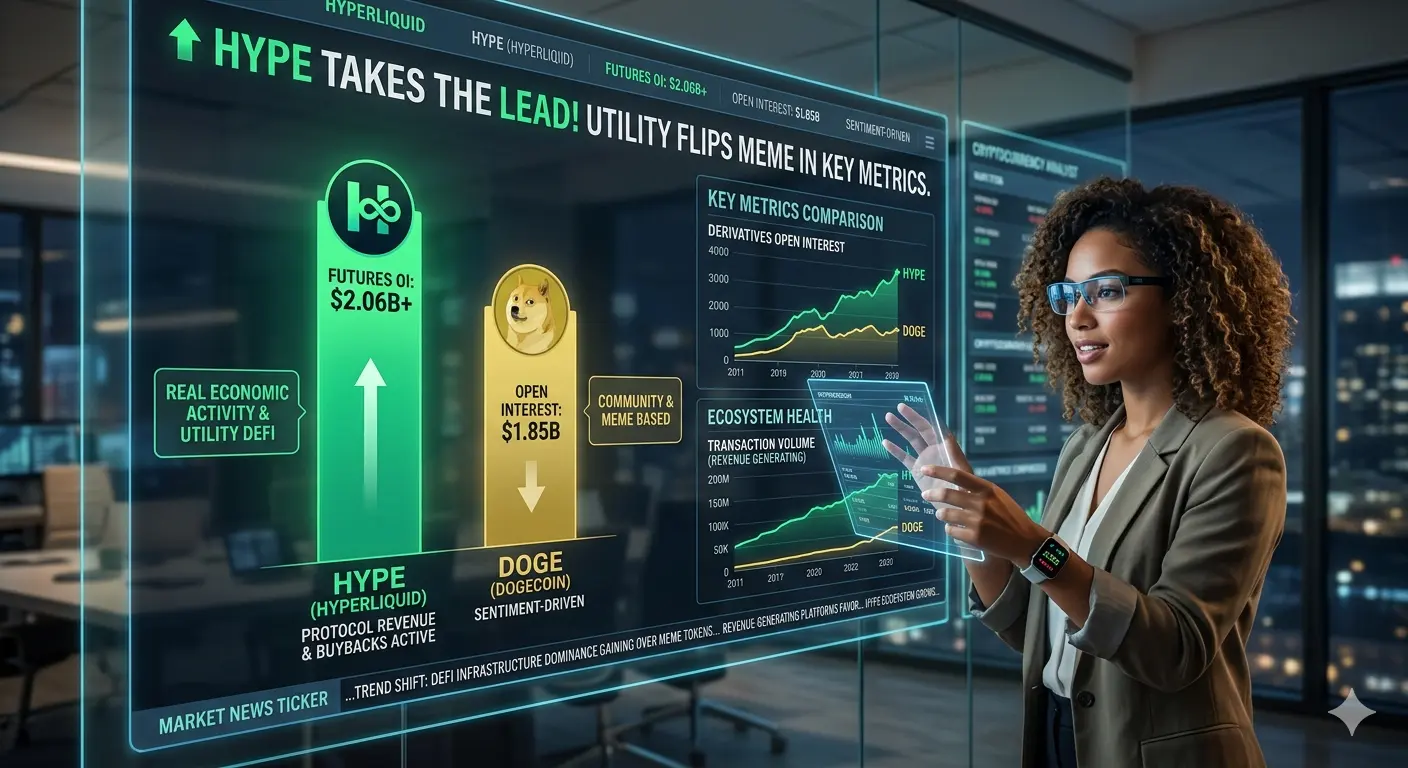
The cryptocurrency market experienced a major structural shift in 2026 when Hyperliquid’s native token HYPE surpassed Dogecoin (DOGE) in key market metrics. This development is not just a ranking change, but a clear signal that the market is gradually shifting from sentiment-driven assets toward utility-based financial infrastructure projects.
HYPE’s rise to become one of the leading digital assets by futures open interest reached $2.06 billion, compared to DOGE’s $1.83 billion, marking a clear dominance in derivatives positioning and trader participation.
This mil
HighAmbition
#HYPEMarketCapSurpassesDOGE
The cryptocurrency market experienced a major structural shift in 2026 when Hyperliquid’s native token HYPE surpassed Dogecoin (DOGE) in key market metrics. This development is not just a ranking change, but a clear signal that the market is gradually shifting from sentiment-driven assets toward utility-based financial infrastructure projects.
HYPE’s rise to become one of the leading digital assets by futures open interest reached $2.06 billion, compared to DOGE’s $1.83 billion, marking a clear dominance in derivatives positioning and trader participation.
This milestone reflects a broader transformation where valuation is increasingly driven by real usage, real liquidity, and real revenue systems rather than pure speculation. The shift highlights how modern crypto markets are evolving toward data-backed ecosystems where trading activity directly translates into token value.
Understanding Hyperliquid and HYPE Token
What is Hyperliquid?
Hyperliquid is a high-performance decentralized derivatives exchange operating on its own Layer 1 blockchain. It focuses on perpetual futures trading with execution speeds comparable to centralized exchanges while maintaining full decentralization.
The platform has processed massive trading activity, including:
$94.3 billion in recent trading activity periods
$172.631 billion 30-day volume
Around $400 billion peak monthly volume (Aug 2025)
Over $4.402 trillion cumulative volume
It currently holds approximately 31.9% of the perpetual DEX market share, making it one of the most dominant infrastructures in decentralized derivatives trading.
Hyperliquid’s architecture is designed for high-frequency trading, deep liquidity, and low-latency execution, which has helped it attract both retail and institutional traders.
HYPE Token Fundamentals
HYPE has a capped supply of 1 billion tokens, with approximately 254 million circulating supply.
Its utility includes:
Gas fees for ecosystem usage
Staking and rewards
Governance rights
However, the most important element is its revenue-linked buyback system.
Key figures include:
97% of trading fees allocated to buybacks
Around 92.78% revenue directed into token purchases
Over $1 billion annualized buyback pressure
Total protocol revenue exceeding $1.16 billion cumulative
This creates a direct connection between platform activity and token demand, forming a self-reinforcing economic loop where usage drives scarcity.
The Historic Surpassing of DOGE
Futures Open Interest Milestone
HYPE achieved $2.06 billion open interest, surpassing DOGE at $1.83 billion.
This positions HYPE among the top 5 digital assets in derivatives exposure, behind BTC, ETH, SOL, and XRP.
Open interest reflects active trading positions and leverage usage, making it a strong indicator of real market participation rather than passive holding.
The milestone signals increasing confidence from derivatives traders in HYPE’s ecosystem and liquidity structure.
Market Capitalization Comparison
HYPE reached a market capitalization of approximately $14.6 billion, positioning it in the global top tier of crypto assets.
Dogecoin holds a market cap of approximately $16 billion, supported by a circulating supply of 154.3 billion DOGE.
This comparison highlights two distinct valuation systems:
HYPE: revenue-driven, infrastructure-backed, buyback-supported
DOGE: sentiment-driven, community-powered, narrative-based
At peak market conditions, HYPE briefly reached valuations comparable to major Layer 1 blockchain networks, reflecting strong investor confidence in its long-term model.
Price Performance Analysis
Historical Price Movements
HYPE has demonstrated extreme growth since launch:
All-time low: $3.81 (Nov 29, 2024)
All-time high: above $60 (May 21, 2026)
Previous peak: $59 (Sep 2025)
Cycle top range: $60–$62 zone
This represents a growth of over 1,400%, driven by expanding trading volume, increasing adoption, and continuous buyback pressure.
Short-Term Price Behavior
Recent market behavior shows strong momentum:
Price range: $47.27 – $48.77
7-day performance: +41.00%
30-day performance: +14.57%
Yearly performance: +80.69%
These figures reflect high volatility combined with consistent upward structural movement, indicating strong market interest and liquidity depth.
Trading Volume Metrics
HYPE maintains strong liquidity conditions:
Daily volume frequently above $400 million
Peak 24-hour volume: $576.97 million
Volume-to-market-cap ratio: approximately 3.9%
DOGE comparison:
DOGE daily volume: approximately $701 million
Despite DOGE having higher nominal volume, HYPE demonstrates stronger relative trading intensity compared to its market capitalization.
Key Drivers Behind HYPE's Success
Assistance Fund Buyback Mechanism
The core driver of HYPE’s valuation is its automated buyback system funded by trading revenue.
Key metrics:
Around 99% of trading fees flow into buybacks
Total protocol revenue: $1.16 billion+ cumulative
Quarterly buybacks:
$316.76 million (Q3 2025)
$255.05 million (Q4 2025)
$192.25 million (Q1 2026)
This shows that buybacks remain strong but are sensitive to trading volume cycles, making revenue conditions a key driver of price stability.
Institutional Adoption and ETF Launch
Institutional inflows increased significantly after ETF approvals in 2026.
Key developments include:
Spot HYPE ETFs launched in May 2026
Early inflows reached tens of millions in the first week
Grayscale-linked wallets accumulated 680,000+ HYPE (~$30 million)
Coinbase integration improved liquidity access
These developments bridge traditional finance with decentralized trading infrastructure.
Treasury Company Participation
A Nasdaq-listed treasury structure holds approximately:
20 million HYPE tokens
Unrealized quarterly gains of $152.5 million
This creates long-term holding pressure and reduces circulating supply, adding structural support to market valuation.
Genuine Trading Activity
Hyperliquid has processed:
$2.6 trillion trading volume in 2025
Higher throughput than some centralized exchanges in specific periods
$56.92 million 30-day fees (~$694.37 million annualized)
This confirms that Hyperliquid’s ecosystem is driven by real financial activity rather than artificial incentives.
Comparison with Dogecoin
DOGE Market Position and Fundamentals
Dogecoin remains one of the most recognized cryptocurrencies globally:
Price: approximately $0.104
Market cap: approximately $16 billion
Circulating supply: 154.3 billion DOGE
Whale holdings: 108.5 billion DOGE (~$11.6 billion value)
DOGE continues to maintain strong community engagement and cultural relevance in the crypto ecosystem.
Key Differences in Value Drivers
HYPE and DOGE represent two fundamentally different valuation models:
HYPE:
Revenue-driven ecosystem
Buyback-supported valuation
Exchange-linked demand structure
Infrastructure-based growth model
DOGE:
Community-driven asset
Sentiment and narrative cycles
Limited direct revenue linkage
Strong cultural and social influence
These differences define their long-term behavior in market cycles.
Trading Strategy and Investment Considerations
Technical Analysis Framework
Key structural levels for HYPE include:
Support zone: $44 – $47
Resistance zone: $60 – $62 (ATH region)
200-day EMA acting as dynamic support
Strong funding rates sometimes exceeding 100% annualized
Market structure remains highly sensitive to volatility and liquidity shifts.
Risk Management Considerations
Key risks include:
Dependence on trading volume cycles
Buyback reduction during low activity periods
Cyclical nature of derivatives markets
Sensitivity to broader crypto market sentiment
Buyback trend example:
$316.76M → $255.05M → $192.25M across quarters
This demonstrates how ecosystem revenue directly impacts token demand strength.
Long-term Price Outlook
Long-term potential depends on:
Sustained multi-trillion trading volume
Expansion into prediction markets and tokenized assets
Maintaining dominance in perpetual DEX sector
Continued institutional adoption
Future growth depends heavily on whether Hyperliquid can maintain its leadership position in decentralized derivatives trading.
Market Implications and Future Outlook
Paradigm Shift in Crypto Valuations
HYPE surpassing DOGE reflects a broader shift toward:
Revenue-backed token valuation
Utility-based financial ecosystems
Institutional-grade DeFi infrastructure
This indicates increasing maturity in the crypto sector where fundamentals matter more than hype cycles.
Competitive Landscape Evolution
Hyperliquid maintains:
31.9% perpetual DEX market share
A lead of $119.873 billion over its nearest competitor
User growth from 300,000 to 1.4 million users in 2025
This strengthens network effects and reinforces liquidity dominance.
Institutional Integration Trends
Institutional adoption includes:
ETF-based exposure
Treasury company accumulation
Exchange integrations
Traditional capital inflows
Protocol revenue exceeding $1.16 billion further validates institutional interest in the ecosystem.
HYPE’s rise above DOGE in key metrics marks a major transformation in the cryptocurrency landscape.
With:
$2.06 billion open interest
$14.6 billion market cap
$60–$62 ATH levels
$1.16 billion cumulative revenue
$4.402 trillion total volume history
HYPE represents a new generation of crypto assets driven by real usage, structured buybacks, and institutional integration.
Dogecoin remains a strong cultural asset with a $16 billion market cap, deep community backing, and long-standing market presence, but HYPE introduces a fundamentally different infrastructure-based financial model.
The market is clearly evolving toward systems where utility, revenue generation, and sustainable economic loops increasingly dominate over pure sentiment-driven valuation.
repost-content-media
  • Reward
  • 4
  • Repost
  • Share
QueenOfTheDay:
To The Moon 🌕
View More
#Nikkei225RecordHigh
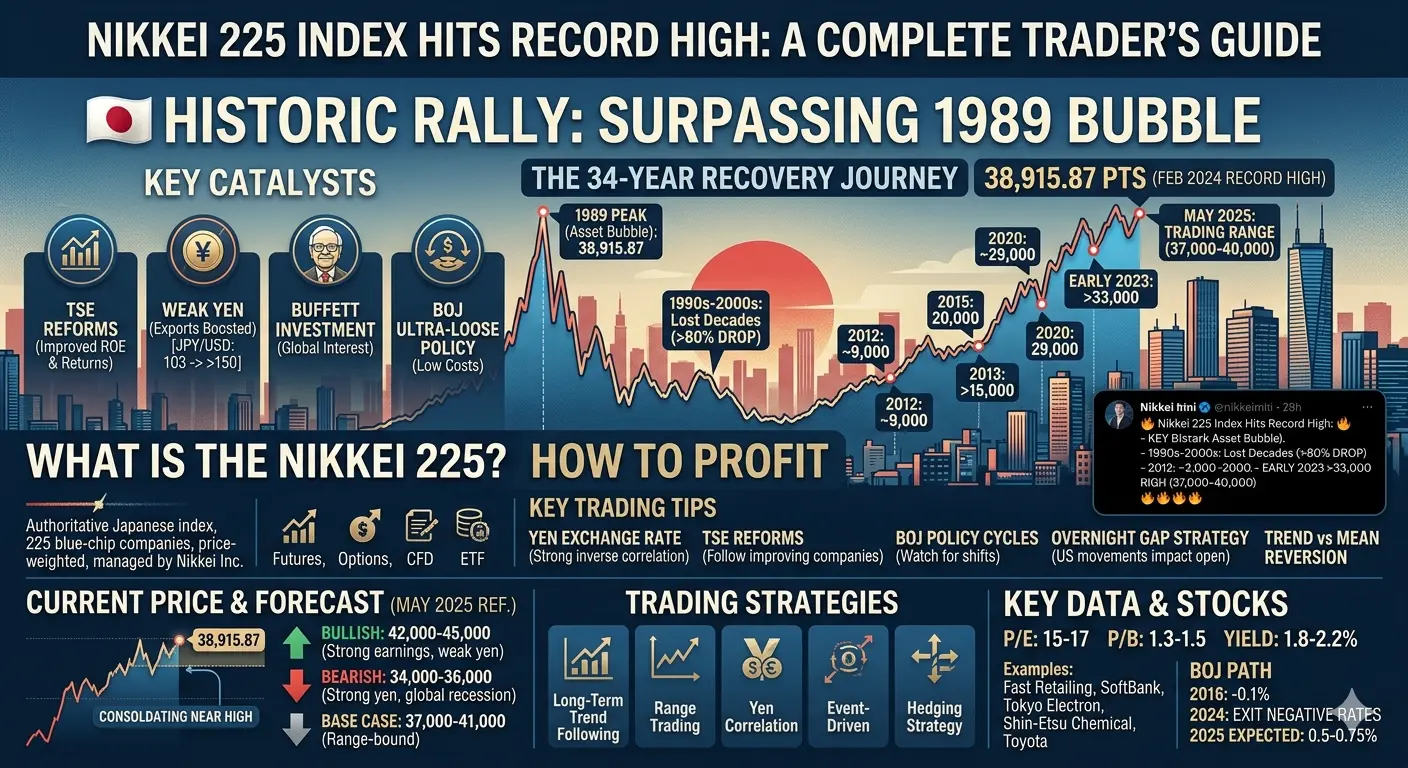
In February 2024, the Nikkei 225 index broke its historic high of 38,915.87 points—a record that had stood since the peak of Japan’s asset bubble on December 29, 1989 for more than 34 years. This milestone shocked global financial markets and marked a deep turning point for the Japanese stock market.
This recovery journey was not overnight. During the 1990s and 2000s, the Nikkei 225 index fell to lows below 7,600 points, losing more than 80% of its value compared to its 1989 peak. This period is known as Japan’s “Lost Decades,” which saw prolonged deflation, stagnant corp
JPN2250.11%
HighAmbition
#Nikkei225RecordHigh
In February 2024, the Nikkei 225 index broke its historic high of 38,915.87 points—a record that had stood since the peak of Japan’s asset bubble on December 29, 1989 for more than 34 years. This milestone shocked global financial markets and marked a deep turning point for the Japanese stock market.
This recovery journey was not overnight. During the 1990s and 2000s, the Nikkei 225 index fell to lows below 7,600 points, losing more than 80% of its value compared to its 1989 peak. This period is known as Japan’s “Lost Decades,” which saw prolonged deflation, stagnant corporate earnings, and deep-rooted pessimism. The index slowly climbed: around 9,000 in 2012, breaking 15,000 in 2013, reaching 20,000 in 2015, trading around 29,000 in 2020, breaking 33,000 in early 2023, and finally closing at 38,915.87 on February 22, 2024, officially surpassing the legendary 1989 record.
Key catalysts behind this historic high include Tokyo Stock Exchange corporate governance reforms aimed at improving capital efficiency, forcing listed companies to increase return on equity and shareholder returns; a sharp depreciation of the Japanese yen (from around 103 JPY/USD in 2021 to above 150 JPY/USD in 2024), which significantly boosted export-driven corporate profits; Warren Buffett’s large investments in Japan’s five major trading houses (Itochu, Marubeni, Mitsubishi, Mitsui, and Sumitomo) between 2020–2023, which reignited global investor interest in Japanese markets; and the Bank of Japan’s ultra-loose monetary policy maintaining low borrowing costs.
Recently, the Nikkei 225 has remained near its historic highs. As of May 2025, the index is fluctuating in the 37,000–40,000 range, with market sentiment still optimistic but cautious amid ongoing global macroeconomic uncertainty.
2. What is the Nikkei 225 — How Traders Profit: Tips, Plans, and Strategies
The Nikkei 225 is Japan’s most authoritative stock market index, composed of 225 blue-chip companies listed on the Tokyo Stock Exchange. It is calculated and managed by Nikkei Inc. and uses a price-weighted method—meaning higher-priced stocks have a greater impact on index movement, unlike market-cap-weighted indices such as the S&P 500. The Nikkei 225 includes major companies ranging from Toyota and Sony to SoftBank and Mitsubishi, making it a comprehensive indicator of Japan’s economic health.
For traders, the Nikkei 225 offers multiple ways to profit:
Futures Trading (Futures and Options): Osaka Exchange Nikkei 225 futures are among the most actively traded index futures globally. Futures contracts allow traders to control large positions with relatively small margin, amplifying gains (and risks). Mini futures contracts (100 yen per point compared to 1,000 yen per point for standard contracts) provide easier access for smaller traders.
CFD (Contracts for Difference): Many online brokers offer Nikkei 225 CFD trading, allowing traders to speculate on rising or falling prices without owning actual futures contracts. CFDs provide flexible position sizing, high leverage, and 24-hour trading capability.
ETF (Exchange-Traded Funds): For investors preferring traditional exposure, Nikkei 225 ETFs (such as MAXIS Nikkei 225 ETF in Japan or international tracking ETFs) provide direct exposure without active trading.
Key Trading Tips and Plans
Tip 1 — Monitor the Yen Exchange Rate: The Nikkei 225 has a strong inverse correlation with the Japanese yen. A weaker yen usually boosts the index (export profits surge), while a stronger yen can pressure the index. During the 2024 record high, yen depreciation was a key driver. Traders must monitor USD/JPY as an essential indicator.
Tip 2 — Track Corporate Governance Reforms: Tokyo Stock Exchange reforms are still ongoing. Companies showing improved ROE, dividend growth, and share buybacks often outperform the index.
Tip 3 — Understand Bank of Japan Policy Cycles: Policy shifts directly impact markets. In March 2024, the Bank of Japan ended negative interest rates—a historic move—but tightening remains gradual. Volatility often increases around BOJ meetings.
Tip 4 — Use Overnight Gap Strategy: The Nikkei trades during Tokyo hours, while US markets continue after Japan closes. US market movements often create gaps at Tokyo open, providing trading opportunities.
Tip 5 — Trend vs Mean Reversion: After breaking historical highs, the Nikkei enters price discovery with no resistance levels. Trend-following strategies perform better, while range trading works during consolidation zones.
3. Current Price, Forecast, and Trading Strategy
Current Price Levels (May 2025 Reference)
The Nikkei 225 is trading around 37,500–39,500, consolidating near its all-time high of 38,915. After breaking the 1989 record, the index repeatedly tested the 39,000–40,000 zone, but global risks (US tariff uncertainty, geopolitical tensions, and intermittent yen strength) create resistance.
Key reference levels:
1989 all-time high: 38,915.87
2024 breakout high: 38,915.87
2024 intraday high: ~40,000 zone
2023 low: ~27,000
Support: 36,000–37,000
Resistance: 39,500–40,000
Forecast Scenarios
Bullish scenarios suggest that if the yen remains weak, corporate earnings grow, and global risk sentiment improves, the Nikkei 225 could reach 42,000–45,000 by 2025, with some aggressive forecasts targeting 50,000 in 2026–2027 due to valuation re-rating from governance reforms.
Bearish scenarios suggest that if the yen strengthens sharply (e.g., below 130), global recession risk rises, or the Bank of Japan tightens faster than expected, the index could fall back to 34,000–36,000.
Base case expectations suggest a 37,000–41,000 range-bound market in 2025, gradually absorbing profit-taking pressure after record highs.
Trading Strategies
Strategy 1 — Long-Term Trend Following:
Hold long positions above 36,000 support. Entry after bounce from 36,500–37,000 zone with daily close above 37,500. Stop-loss below 35,500. Targets: 39,500 → 41,000 → 42,500.
Strategy 2 — Range Trading:
Buy near 37,000–37,500 support and sell near 39,000–39,500 resistance. Stop-loss below 36,000 or above 40,500 depending on direction.
Strategy 3 — Yen Correlation Strategy:
Go long Nikkei when USD/JPY strengthens from key support (145). Reduce exposure or hedge when USD/JPY reaches resistance (155+) and shows reversal.
Strategy 4 — Event-Driven Strategy:
Trade around BOJ meetings, corporate earnings, TSE reforms, and US macro data releases.
Strategy 5 — Hedging Strategy:
Use puts or short futures as protection near all-time highs when volatility is low.
4. Key Data Explanation (Text Form)
The Nikkei 225 fell from 38,915 in 1989 to a low of 7,054 in 2009, a drop of nearly 80%. Recovery milestones include: 2012 (~9,400), 2013 (~15,000), 2015 (~20,000), 2020 (~27,000), 2023 (~33,000), and 2024 breakout above 38,915.
Valuation metrics:
P/E ratio: ~15–17
P/B ratio: ~1.3–1.5
Dividend yield: ~1.8–2.2%
The Japanese yen moved from 103 (2021) to around 155 (2025), with depreciation strongly supporting exporters.
Key stocks include: Fast Retailing (7751), SoftBank (9984), Tokyo Electron (8035), Shin-Etsu Chemical (4063), and Toyota (7203). Because the index is price-weighted, high-priced stocks like Tokyo Electron have more influence than larger companies like Toyota.
BOJ policy path:
2016: -0.1% negative rates
2024: exit from negative rates
2025 expectations: 0.5–0.75%
Social Media Post
🔥 Japan’s Nikkei 225 has made history by surpassing its 1989 peak after 34 years—one of the greatest recoveries in financial history.
Corporate reforms, yen depreciation, Buffett effect, and BOJ policy created this powerful rally.
The index is now consolidating near all-time highs with strong support at 36,000 and resistance near 40,000.
Mid-term targets point toward 42,000–45,000, with long-term upside even higher under favorable conditions.
The key insight: USD/JPY drives the Nikkei. Understanding the yen is half the trading edge.
What is your strategy—trend following or range trading? 🚀
@Gate_Square @Gate广场_Official #TradfiTradingChallenge #DailyPolymarketHotspot
repost-content-media
  • Reward
  • 3
  • 1
  • Share
cryptoStylish:
2026 GOGOGO 👊
View More
#DollarIndexBreaksBelow99
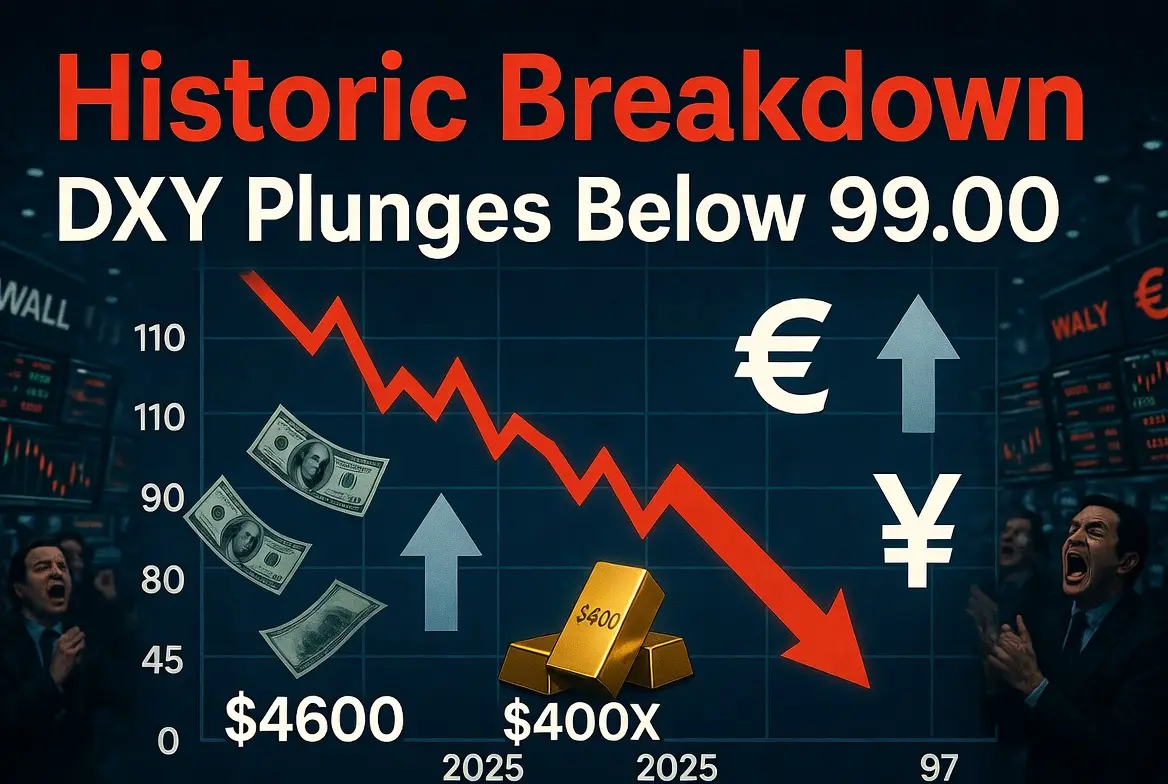
The Historic Breakdown
The United States Dollar Index (DXY) has broken below the psychologically critical 99.00 level, marking one of the most significant currency breakdowns seen in global financial markets during the modern floating exchange-rate era, and this historic decline is being viewed by institutional investors, central banks, hedge funds, commodity traders, and multinational corporations as far more than a temporary correction because it reflects a broader shift in confidence regarding the long-term stability of U.S. fiscal policy, monetary credibility, de
HighAmbition
#DollarIndexBreaksBelow99
The Historic Breakdown
The United States Dollar Index (DXY) has broken below the psychologically critical 99.00 level, marking one of the most significant currency breakdowns seen in global financial markets during the modern floating exchange-rate era, and this historic decline is being viewed by institutional investors, central banks, hedge funds, commodity traders, and multinational corporations as far more than a temporary correction because it reflects a broader shift in confidence regarding the long-term stability of U.S. fiscal policy, monetary credibility, debt sustainability, and America’s role at the center of the global financial system.
The collapse below 99.00 carries major technical and psychological importance because this zone had repeatedly acted as a strong institutional support region during previous periods of market stress, and once such a long-standing support structure fails under heavy volume and sustained selling pressure, markets often interpret the move as confirmation that a deeper long-term trend reversal is underway rather than a short-term fluctuation driven by temporary headlines or speculative positioning.
Currency strategists across major banks now believe that the dollar may be entering a prolonged structural downtrend similar to major historical periods of dollar weakness seen after the Bretton Woods collapse in 1973, the Plaza Accord era of the mid-1980s, and the gradual depreciation cycle that unfolded during the early 2000s, although the current situation is considered more dangerous because fiscal concerns, trade uncertainty, geopolitical fragmentation, and declining institutional confidence are all occurring simultaneously.
The Magnitude of the Decline: By The Numbers
The scale of the dollar’s decline throughout 2025 has been extraordinary by historical standards because the U.S. Dollar Index has fallen nearly 10.1% year-to-date, making it the steepest annual decline in roughly three decades and the weakest first-half performance for the dollar in more than fifty years, while intraday volatility has surged to levels rarely seen in reserve currencies as traders witnessed multiple trading sessions where the DXY moved between 1.0% and 1.5% within hours.
The index collapsed from highs near 109.80 reached during the strong-dollar rally phase into lows around 97.70 during early July trading before staging a limited rebound toward the 98.80–99.20 region, but despite these temporary recoveries the broader structure remains deeply bearish because the dollar continues trading below major moving averages including the 100-day and 200-day trend indicators that many institutional traders use to define long-term momentum direction.
Relative to historical averages, the DXY now trades approximately 5.7% below its 2022–2025 average, slightly above the 2015–2020 average, yet still significantly stronger than the extremely weak-dollar environment experienced between 2007 and 2014 when the index traded near 78–88 for extended periods, which means that although the current collapse appears severe, some analysts argue that additional downside toward 95.00 or even 92.00 cannot be ruled out if macroeconomic conditions continue deteriorating.
Understanding the Dollar Index Composition
The U.S. Dollar Index measures the value of the dollar against a basket of six major global currencies, including the euro with a dominant weighting of 57.6%, followed by the Japanese yen at 13.6%, British pound at 11.9%, Canadian dollar at 9.1%, Swedish krona at 4.2%, and Swiss franc at 3.6%, which means that movements in EUR/USD have the single largest influence on the overall direction of the DXY.
Because of the euro’s overwhelming weighting within the index, the recent DXY collapse has largely reflected aggressive euro appreciation as EUR/USD surged from the 1.04–1.05 range toward 1.16–1.18, while USD/JPY simultaneously dropped from highs above 161 toward 146–148 due to strong yen buying and Bank of Japan policy normalization expectations.
The index was originally established in 1973 after the collapse of the Bretton Woods fixed exchange-rate system, and since then it has become one of the most closely watched macroeconomic benchmarks in global finance because movements in the dollar influence commodity pricing, international trade flows, debt servicing costs, inflation dynamics, capital allocation, and central-bank reserve management worldwide.
Root Causes: Why the Dollar Is Falling
Trade Policy Shock and "Liberation Day"
The April 2, 2025 tariff announcement, widely referred to by markets as “Liberation Day,” became the single most important catalyst behind the dollar’s collapse because the administration introduced sweeping tariffs covering imports from nearly 180 countries, creating immediate fears of slowing global trade, weakening corporate earnings, rising inflationary pressure, and recession risks across both developed and emerging economies.
Instead of strengthening the dollar as traditional economic models would normally predict, the tariffs triggered aggressive foreign selling of U.S. assets because international investors feared that escalating trade tensions could damage long-term U.S. growth prospects, disrupt global supply chains, and reduce the attractiveness of American financial markets, leading to more than $5 trillion being erased from the S&P 500 within just three trading sessions while Treasury yields spiked sharply due to heavy bond-market liquidation.
Federal Reserve Independence Concerns
Financial markets also became increasingly concerned about political pressure on Federal Reserve Chair Jerome Powell because repeated demands for immediate rate cuts created fears that the Fed’s independence could weaken, and institutional investors historically consider central-bank credibility one of the most important pillars supporting reserve-currency stability.
Interest-rate futures now price in multiple Federal Reserve cuts before year-end, with expectations that benchmark rates could fall from the 5.25%–5.50% region toward 4.25%–4.50%, and lower interest rates naturally reduce the yield advantage that previously supported dollar strength during 2022 and 2023 when aggressive tightening pushed Treasury yields above 5%.
Fiscal Sustainability Worries
Concerns surrounding U.S. debt sustainability have intensified dramatically because projected federal debt levels continue climbing toward $40 trillion while the debt-to-GDP ratio remains near historically extreme levels above 120%, and investors fear that persistent deficit expansion combined with slower economic growth could eventually undermine confidence in long-term Treasury stability.
Moody’s decision in May 2025 to downgrade U.S. sovereign credit added further pressure because the downgrade reinforced market fears that America’s fiscal trajectory is becoming increasingly difficult to stabilize without either substantial spending cuts, stronger growth, or significantly higher taxation in future years.
Safe-Haven Status Erosion
Perhaps the most important structural development is the gradual erosion of the dollar’s traditional safe-haven status because during previous geopolitical crises investors almost automatically rushed into dollars and Treasuries, whereas the current environment has seen gold rally above $4,600 per ounce while the dollar simultaneously weakened despite elevated geopolitical uncertainty across the Middle East, Eastern Europe, and Asia.
This unusual divergence signals that many investors are increasingly viewing gold, select commodities, and alternative reserve assets as safer stores of value than dollar-denominated instruments during periods of global instability.
Global Impact and Market Reactions
Commodity Price Surge
The decline in the dollar has triggered powerful rallies across commodity markets because dollar-denominated assets become cheaper for holders of foreign currencies whenever the greenback weakens, resulting in gold surging above $4,600, silver climbing toward $58, copper moving above $6.20 per pound, and Brent crude fluctuating between $96 and $112 depending on geopolitical developments and demand expectations.
Central banks across Asia and the Middle East have accelerated gold purchases at record pace while reducing portions of their Treasury holdings, contributing further to the precious-metals rally and reinforcing broader de-dollarization narratives developing within global reserve-management strategies.
Emerging Market Currency Strength
Emerging-market currencies including the Brazilian real, Mexican peso, Indian rupee, and several Southeast Asian currencies have strengthened considerably against the dollar, improving purchasing power and reducing imported inflation pressures, although stronger local currencies may create challenges for export competitiveness if appreciation continues too rapidly.
Cryptocurrency Market Response
Cryptocurrency markets have responded in a more complex manner because although weaker fiat conditions traditionally support alternative assets such as Bitcoin and Ethereum, digital assets are increasingly influenced by ETF inflows, institutional leverage positioning, liquidity cycles, and macro risk appetite rather than simple dollar weakness alone.
Bitcoin traded between $92,000 and $118,000 during the broader DXY collapse while Ethereum fluctuated between $4,800 and $6,900, showing that crypto markets remain volatile despite favorable long-term monetary conditions.
Technical Analysis: What Breaking Below 99 Means
From a technical perspective, the break below 99.00 confirms a major bearish continuation pattern because former support has now transformed into resistance, meaning future rallies toward 99.00–100.00 may attract renewed institutional selling pressure unless macroeconomic conditions improve significantly.
The next downside support zones are clustered near 98.50–98.20 followed by the psychologically important 97.50 region, while a sustained breakdown below 97.50 could expose deeper targets around 96.00 and potentially 94.80 over the medium term.
Momentum indicators including weekly RSI, MACD, and trend-volume analysis continue signaling strong downside momentum, while elevated trading volume during declines confirms that the move reflects genuine institutional repositioning rather than temporary speculative volatility.
Conclusion: A Watershed Moment
The Dollar Index breaking below 99 represents one of the most important macroeconomic developments of the decade because it reflects a combination of fiscal concerns, monetary-policy uncertainty, trade instability, and changing global reserve preferences that collectively challenge the assumption of permanent dollar dominance within the international financial system.
Although the dollar remains the world’s primary reserve currency and still dominates global trade settlement, cross-border lending, commodity pricing, and foreign-exchange reserves, the speed and scale of the recent decline suggest that global investors are becoming increasingly willing to diversify away from exclusive dependence on U.S. assets whenever confidence in American policy management weakens.
If policymakers fail to restore fiscal discipline, maintain Federal Reserve credibility, and stabilize long-term growth expectations, the dollar could face extended structural weakness over the coming years with potential downside targets toward 95.00–92.00, while gold, commodities, emerging markets, and alternative reserve assets may continue benefiting from the broader transition toward a more fragmented and multipolar financial system.@Gate_Square @Gate广场_Official #DailyPolymarketHotspot #TradfiTradingChallenge
repost-content-media
  • Reward
  • 10
  • 1
  • Share
cryptoStylish:
2026 GOGOGO 👊
View More
Market Trend Analysis
1,239 views
2026-05-25 03:00
  • Reward
  • Comment
  • Repost
  • Share
#Web3SecurityGuide #Web3SecurityGuide
Depositing and withdrawing funds in crypto looks simple, but one small mistake can lead to permanent loss.
Unlike traditional banking, blockchain transactions cannot be reversed once confirmed. That’s why security habits matter more than ever in Web3.
One of the biggest risks is sending assets to the wrong network or wallet address
. For example, sending USDT through the wrong chain can lock funds forever.
Always double check wallet addresses, network types, and token compatibility before confirming any transaction.
Even experienced traders make mistake
post-image
  • Reward
  • 8
  • 2
  • Share
BabaJi:
To The Moon 🌕
View More
#30YearTreasuryYieldBreaks5%
The bond market is sending a powerful signal.
The 30-year US Treasury yield just surged to 5.16%, the highest level since 2007, showing how deeply investors are rethinking inflation, interest rates, and long term economic stability.
When Treasury yields climb this fast, pressure spreads across every market.
Stocks become more volatile, borrowing gets more expensive, and global liquidity tightens.
For crypto traders, this matters more than many realize.
Higher yields often pull capital toward safer assets, but they can also expose
BTC-1.95%
post-image
post-image
  • Reward
  • 8
  • 2
  • Share
BabaJi:
To The Moon 🌕
View More
#HYPEOutperformsAgain
HYPE is proving once again why strong momentum and community confidence matter in crypto.
As of May 22, the token surged nearly 15% in just one day and reached a fresh intraday high, catching the attention of traders across the market.
While many assets are still struggling to recover momentum, HYPE continues to outperform with aggressive buying pressure, rising trading volume, and growing investor interest
. Moves like this are not driven by hype alone. They reflect confidence, market participation, and belief in long term potential.
What makes this rally even more inte
HYPE-4.45%
post-image
post-image
  • Reward
  • 12
  • 5
  • Share
BabaJi:
To The Moon 🌕
View More
#WarshSwornInAsFedChair
#WarshSworninAsFedChair#
A new chapter for the global financial system has officially begun.
Kevin Warsh taking the oath as the 17th Federal Reserve Chairman is already becoming one of the biggest macro events of the year.
Markets are now watching closely for signals on interest rates, inflation control, liquidity, and the future direction of the US economy.
Crypto traders know this moment matters. Every statement from the Fed can move Bitcoin, altcoins, stocks, gold, and even global investor sentiment within minutes.
A more hawkish stance could tighten liquidity, w
BTC-1.95%
post-image
post-image
  • Reward
  • 9
  • 2
  • Share
BabaJi:
To The Moon 🌕
View More
#SpaceXOfficiallyFilesforIPO
The impossible keeps becoming reality.
From reusable rockets to global satellite internet, SpaceX has already changed the future of technology. Now the company is preparing for one of the biggest IPO moments in market history.
This is not just another stock listing.
This is the commercialization of space, AI, satellite communication, and next generation infrastructure all coming together under one vision led by Elon Musk.
If the IPO launches successfully, it could redefine how investors look at innovation companies for the next decade.
Starlink growth, AI expansi
post-image
post-image
  • Reward
  • 7
  • 2
  • Share
BabaJi:
To The Moon 🌕
View More
#GateSquarePizzaDay .
Today, that transaction is remembered as the moment Bitcoin proved it could become real money, not just an idea. 🍕🚀
What makes #GateSquarePizzaDay special is not only the insane value of those pizzas today, but the lesson behind them.
Every massive innovation starts with one simple transaction, one believer, and one risk that most people don’t understand at the time.
Back then, many laughed at Bitcoin.
Today, the entire financial world watches crypto markets every single day. From decentralized finance to global payments, Bitcoin changed the conversation forever.
For
BTC-1.95%
post-image
post-image
  • Reward
  • 6
  • 2
  • Share
BabaJi:
To The Moon 🌕
View More