AIG (American International Group) is a globally recognized insurance group with a long-standing focus on commercial insurance, property insurance, liability insurance, and risk management services. Unlike the traditional insurers many might picture, AIG primarily serves corporate clients, with operations spanning manufacturing, energy, aviation, financial services, multinational trade, and more.
By understanding how AIG's insurance products apply in real-world scenarios, we can better appreciate how the insurance industry underpins modern economic activity—and also helps investors understand how American International Group sustains its long-term value in the global insurance market.
Why AIG's Insurance Services Matter
Modern society is fraught with uncertainty. From natural disasters to cyberattacks, equipment breakdowns to litigation, both individuals and businesses face unpredictable risks. Without insurance, many losses could jeopardize business continuity or personal financial stability.
AIG's insurance services function as a risk transfer mechanism. Clients pay premiums to shift a portion of potential losses onto the insurer. When a covered event occurs, the insurer absorbs the financial impact, helping to soften the blow.
For businesses, insurance is more than a safety net—it's a strategic management tool. Large corporations often rely on insurance to cover operational risks, ensuring stable, long-term growth. For individuals, it safeguards homes, vehicles, and other valuable assets.
That's why the insurance industry has become a cornerstone of the modern financial system, and AIG remains one of its key players.
How Corporate Clients Use AIG Commercial Insurance
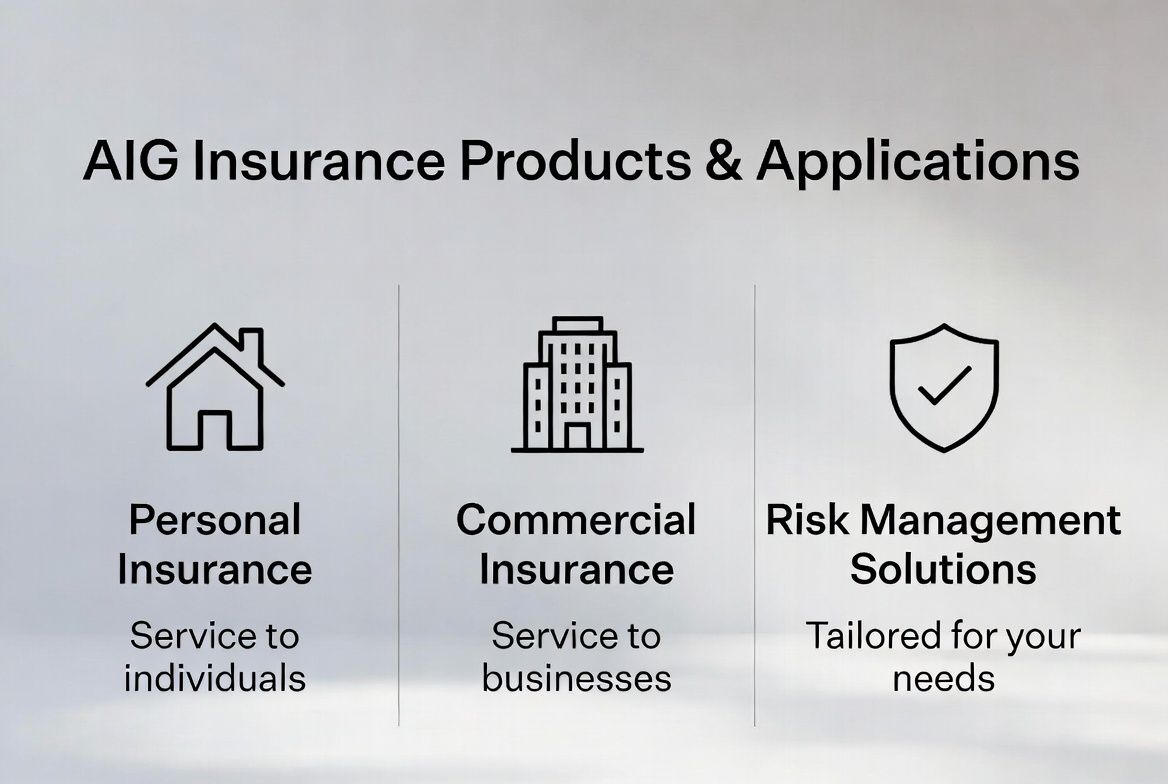
Commercial insurance is one of AIG's flagship areas. Many large enterprises face complex operational risks, and commercial insurance helps minimize potential losses.
For instance, manufacturers need to protect factory equipment and production facilities; logistics firms manage transportation risk; tech companies deal with cybersecurity threats. Any of these could trigger massive financial damage, so companies typically purchase tailored coverage.
AIG designs insurance solutions based on industry specifics. Energy companies may require environmental liability insurance, airlines need aviation liability coverage, and multinationals need policies spanning multiple countries and regions. This specialized service capability gives AIG a strong competitive edge in the corporate market.
As global commerce grows more complex, demand for risk management is rising—and commercial insurance is becoming more critical than ever. This is one of AIG's core growth markets.
Property Insurance Applications
Property insurance is one of the most fundamental insurance lines and a key product offering for AIG.
For corporate clients, office buildings, factories, warehouses, equipment, and inventory are all vital assets. If a fire, flood, storm, or other accident strikes, these assets can suffer significant damage. Property insurance provides financial compensation to help businesses recover and resume operations.
In the personal market, homeowners, auto, and personal property insurance are common applications. Although AIG has increasingly focused on corporate clients in recent years, property protection remains a core part of the overall insurance ecosystem.
With extreme weather events and natural disasters on the rise, both businesses and individuals are placing greater emphasis on property protection—keeping property insurance a major source of demand globally.
How Liability Insurance Helps Businesses Manage Risk
Protecting assets isn't enough—businesses also need to manage legal liability risks arising from their operations. That's where liability insurance comes in.
For example, defective products can trigger consumer lawsuits; medical facilities face malpractice claims; large-scale engineering projects may cause third-party damages. Without liability coverage, these risks could lead to massive compensation burdens.
AIG has deep expertise in the liability insurance market, offering professional liability, product liability, and directors and officers (D&O) insurance, among others. These products provide financial support when companies face litigation or compensation claims.
As regulations tighten and legal risks grow, liability insurance has become an essential part of corporate risk management—and AIG brings years of specialized experience to the table.
Why Global Enterprises Need Cross-Border Insurance
Globalization means more companies operate across multiple countries and regions. But different markets have different legal systems, regulations, and risk profiles—driving demand for cross-border insurance.
Take a multinational manufacturer: headquarters in the U.S., sales offices in Europe, production bases in Asia. Such a company needs a unified risk management framework, not just single-country policies.
AIG's global network is one of its key advantages. The company can offer multi-region insurance solutions and coordinate coverage across markets—especially valuable for international trade, cross-border investment, and global supply chain players.
As global business activity expands, cross-border insurance has become a key differentiator for AIG versus more regionally focused competitors.
Why Risk Management Demand Drives AIG's Long-Term Growth
Over the long haul, the insurance industry's growth isn't driven by any single product—it's fueled by ever-expanding demand for risk management.
Businesses today face an evolving risk landscape: beyond traditional property and liability risks, new threats like cybersecurity, supply chain disruptions, data breaches, and climate change are front and center. These risks are complex and global in nature, requiring professional insurance support.
AIG doesn't just sell policies—it offers risk assessment and management services. By helping clients identify, quantify, and address risks, the company builds long-term relationships. That transforms insurance from a simple payout mechanism into a comprehensive risk management solution.
As global economic complexity rises, corporate spending on risk management is expected to climb, and AIG is well-positioned to benefit from this long-term trend.
Summary
AIG's (American International Group) insurance products are widely used across business operations, property protection, liability management, and cross-border commercial activities. Through commercial, property, liability, and global risk management services, AIG helps clients reduce operational uncertainty and strengthen their risk-bearing capacity. As the global risk landscape grows more complex and corporate risk management needs increase, insurance services continue to gain importance—and AIG remains a key player in the global insurance market.
FAQ
What are the main insurance products AIG offers?
AIG primarily offers commercial insurance, property insurance, liability insurance, and risk management services.
What types of companies use AIG's commercial insurance?
Manufacturing, energy, aviation, healthcare, financial services, and multinational corporations are among the key clients.
What does property insurance cover?
Property insurance covers losses to buildings, equipment, inventory, and other assets caused by unexpected events.
What is liability insurance for?
Liability insurance helps businesses manage risks from lawsuits, third-party claims, and compensation liabilities arising from operations.
Why do multinational corporations need AIG's insurance?
Multinationals need coordinated risk management across multiple countries and regions—AIG's global network delivers that.
Why is risk management important to AIG?
Risk management is core to insurance operations, impacting underwriting quality, client value, and long-term profitability.