


Introduction
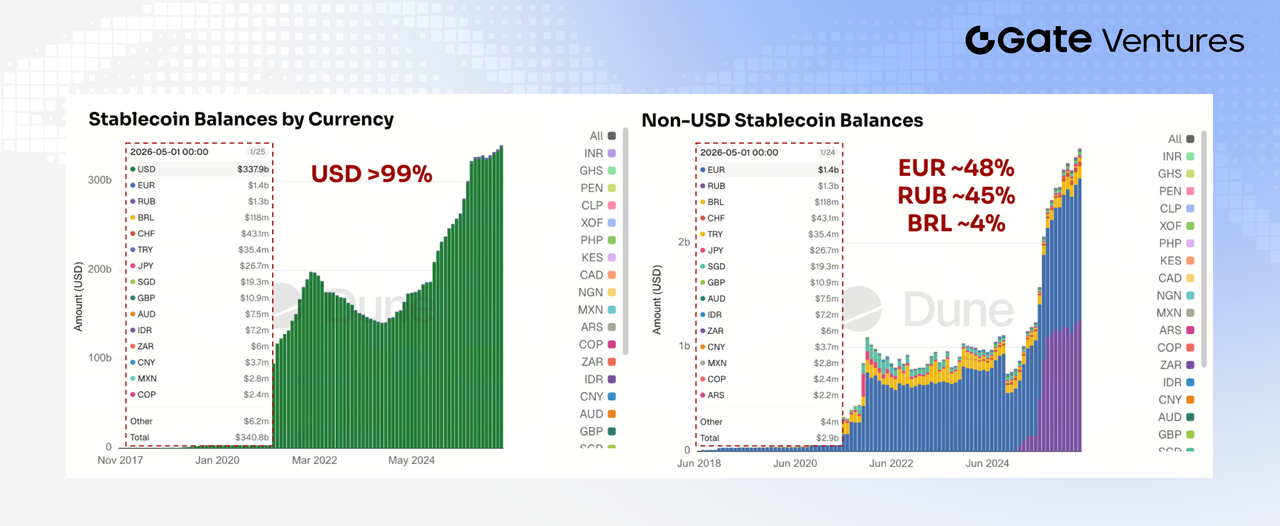
Source: Dune@stablecore
When it comes to stablecoins, the market usually associates them first with USD stablecoins such as USDT and USDC. This is not surprising, as data shows that USD stablecoins still occupy nearly 99% of the market supply and have long served as the primary trading medium, settlement unit, and liquidity infrastructure in the crypto market.
However, non-USD stablecoins are gradually showing notable development momentum.
From January 2023 to February 2026, the total supply of local currency stablecoins grew from approximately $700 million to nearly $1.2 billion, an increase of about 70%. Even more notably, the on-chain transfer volume during the same period grew from approximately $600 million to $10 billion, achieving roughly 16x growth. (1)
This trend reflects a structural shift in the positioning of stablecoins. Their function is gradually evolving from a US dollar-centric crypto liquidity tool to a broader multi-currency financial infrastructure. In this process, non-USD stablecoins and on-chain FX form a complementary relationship and begin to reshape the underlying architecture of cross-border payments, corporate treasury management, and local currency settlement systems.
Meanwhile, infrastructure platforms like Circle StableFX are beginning to emerge, specifically designed to support on-chain FX swaps. Through the RFQ swap mechanism, they provide exchange and liquidity routing capabilities between different stablecoin ecosystems.
Currently, the non-USD stablecoin market is still mainly concentrated on EUR and RUB, but their growth logic is completely different.
For EUR stablecoins, the main advantages come from the regulatory certainty brought by MiCA, as well as the status of the Euro itself as a major global international currency.
A clear compliance framework lowers the barrier for institutional adoption, making Euro stablecoins like EURC easier to integrate into payments, DeFi, Treasury management, and on-chain FX scenarios, gradually evolving into on-chain Euro financial infrastructure.
In contrast, demand for RUB stablecoins has been driven largely by geopolitical factors and growing frictions in cross-border payments following the Russia–Ukraine conflict. After the 2022 invasion, several Russian banks were removed from the SWIFT network, access to USD and EUR settlement channels became more restricted, and many international banks reduced exposure to Russian counterparties due to sanctions risk.
This significantly increased the complexity and cost of traditional cross-border fund flows, pushing some Russian businesses and market participants to explore alternative settlement rails, including cryptocurrencies and stablecoins.
In this context, the value of the RUB stablecoin lies more in providing flexible on-chain settlement methods for regional trade and restricted payment scenarios, rather than serving DeFi or on-chain return scenarios.
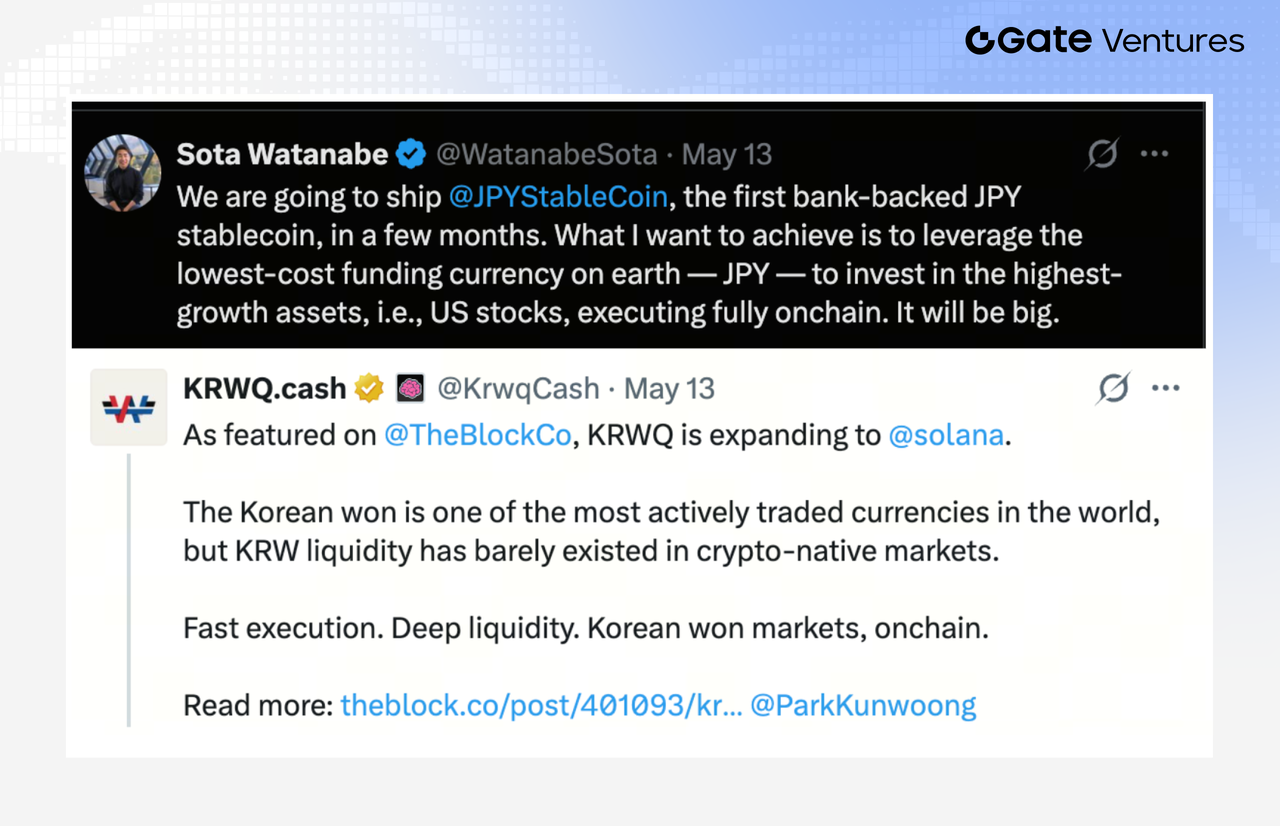
Source: X
On the other hand, we are also seeing more countries advancing the development of local currency stablecoins, with Japan and South Korea actively exploring relevant frameworks. This round of development is largely driven by regulation: countries want to bring their national currencies into the on-chain financial system based on clear requirements for issuance, reserves, redemption, and compliance. (2) (3)
As more sovereign currencies are tokenized and enter on-chain circulation, an early on-chain FX market is taking shape.
In the future, different local stablecoins will no longer be intermediated solely through USD stablecoins; instead, they will have the opportunity to be directly swapped via on-chain liquidity pools, market makers, and atomic settlement mechanisms, gradually building a multi-currency, real-time settlement on-chain FX network.
Why Need Non-USD Stablecoins?
If USDT/USDC already occupy nearly 99% of the market, why are local currency stablecoins still needed?
Non-USD stablecoins emerged not to directly challenge the liquidity position of USD stablecoins, but to address the structural shortcomings of USD stablecoins in local currency settlement, cross-border payments, and corporate treasury management.
USD stablecoins solve the liquidity problem of the global crypto market, but in real-world business scenarios, businesses, merchants, and individuals still ultimately need to receive, pay, record, and settle in local currencies. Therefore, when fund flows involve different countries, currencies, and banking systems, relying solely on USD Stablecoins still cannot completely eliminate frictions such as FX swaps, deposits and withdrawals, pre-funded capital, and local settlement.
The value of local-currency stablecoins lies in bringing domestic currency directly on-chain, allowing businesses and users to retain exposure to their domestic currency while gaining the advantages of real-time settlement and cross-border liquidity.
EURC/BRLA/XSGD Case Study: Development Paths in Different Regions
Non-USD stablecoins do not follow the same path of development; instead, they are jointly determined by regional regulatory environments, payment pain points, and local financial infrastructure.
EURC, BRLA, and XSGD, as three stablecoins with different development paths, respectively represent three typical models: a regulatory-driven on-chain euro infrastructure, a real-payment-driven enterprise settlement tool, and an invisible settlement layer behind regional payment networks.
EURC
EURC's development has primarily benefited from the gradual clarification of the European regulatory framework. MiCA provides clear rules for stablecoin issuance, reserve management, redemption mechanisms, and compliance requirements, lowering the barrier for financial institutions, payment companies, and DeFi protocols to adopt euro-denominated stablecoins.
Meanwhile, the Euro itself is one of the world’s major international currencies, with a broad foundation for use in trade, bonds, and FX reserves. Therefore, when the Euro is introduced on-chain, it naturally has the conditions to become an on-chain Euro settlement asset.
At the payment level, EURC has formed connections with traditional payment networks such as Visa. Through real-time payment and settlement infrastructure like Visa Direct, EURC can be used for faster cross-border payments, corporate settlements, and multi-currency fund allocation, enabling on-chain euros to access existing payment networks instead of remaining in crypto-native scenarios.
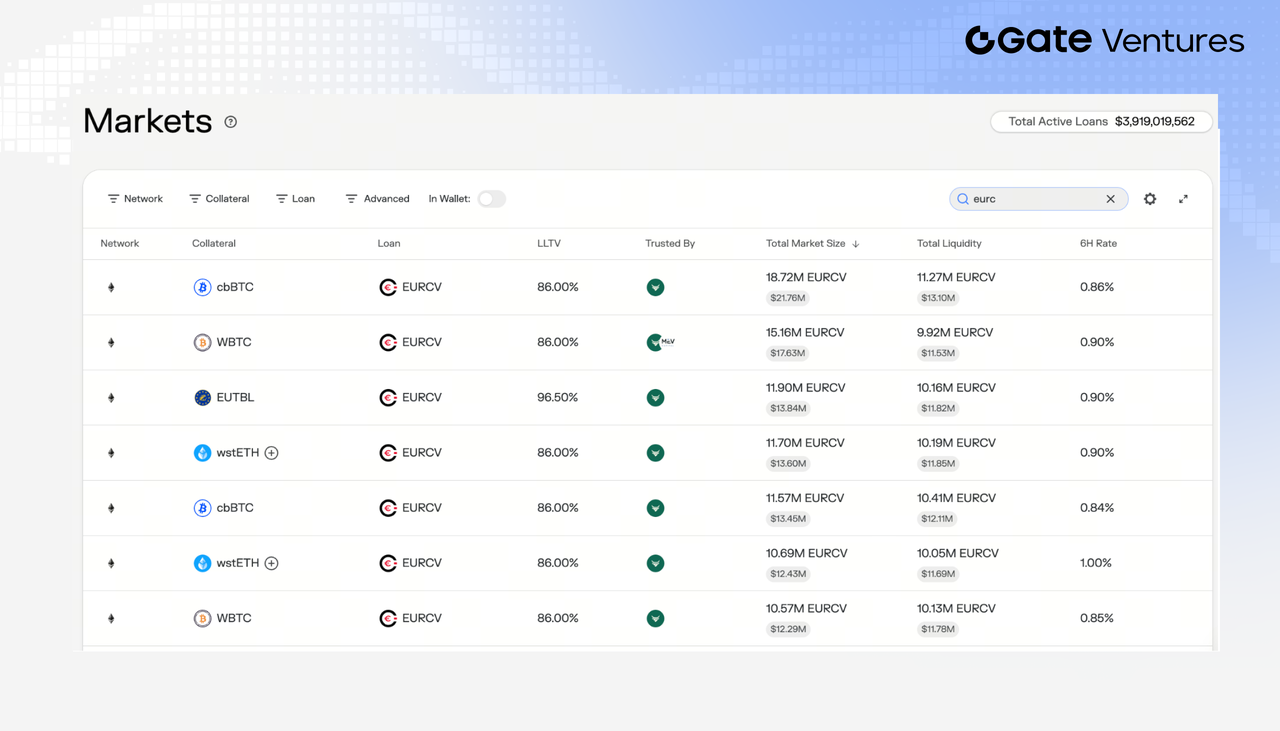
Source: Morpho
At the DeFi level, EURC has also begun to enter mainstream lending markets such as Aave and Morpho. On Aave, EURC can be used as a lending asset or as collateral, providing users with euro-denominated on-chain lending scenarios. On Morpho, EURC aggregates liquidity through vaults managed by professional institutions and optimizes interest rates, enabling institutions and advanced users to deploy euro capital more efficiently.
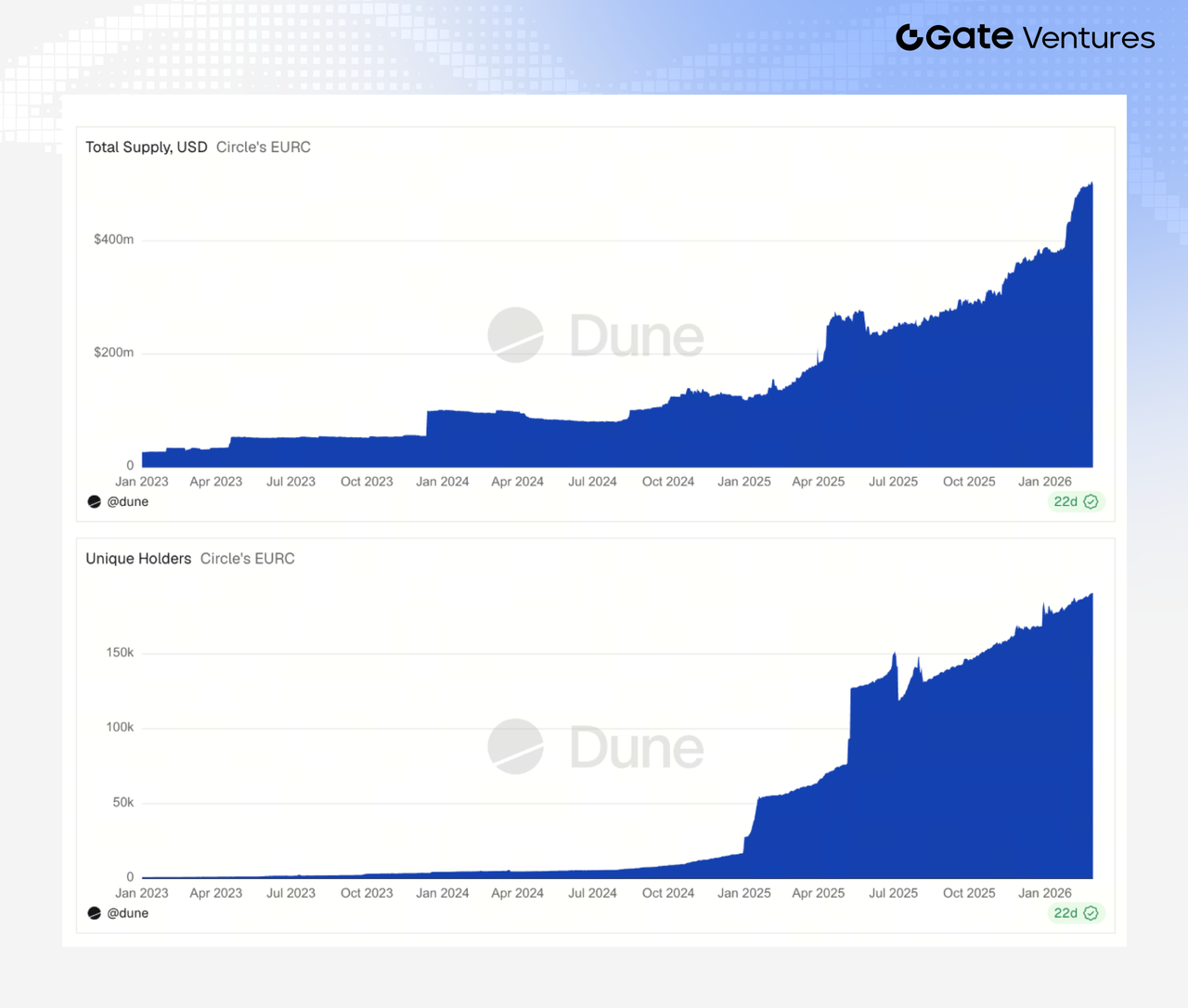
Source: Dune Analytics
Therefore, compared to most non-USD stablecoins that remain at the payment or regional settlement level, EURC is closer to the development path of USDC: it is not only a payment asset but is also entering payment networks, lending markets, treasury management, and on-chain FX scenarios, gradually evolving into on-chain euro financial infrastructure. Multi-scenario demand and broader infrastructure integration have also driven EURC's steady growth since its issuance, with total supply currently exceeding 500 million USD.
BRLA
BRLA's logic is clearly different. Brazil and Latin America have long faced issues such as high cross-border payment costs, large FX spreads, local currency volatility, and low bank settlement efficiency.
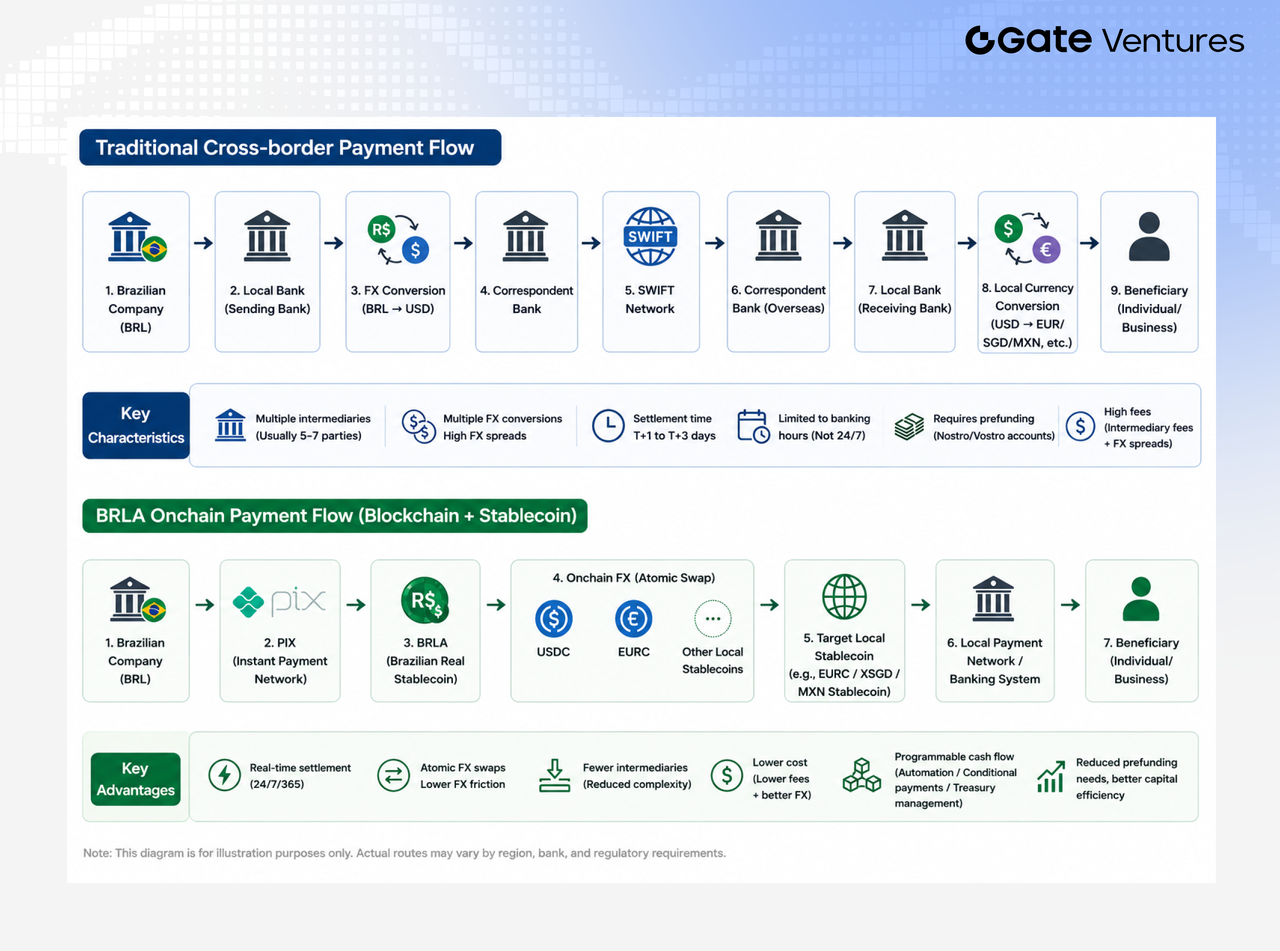
Although Brazil already has a highly mature instant payment network, PIX, PIX mainly solves real-time transfers between domestic Brazilian accounts. When funds need to leave Brazil, enter another currency system, or be used for cross-border settlement, overseas payroll, and regional treasury management, businesses still depend on banks, foreign exchange services, correspondent banks, and traditional clearing networks. The original friction of cross-border payments has not been fully eliminated.
BRLA’s value lies in this: it is not a replacement for PIX, but rather a way to connect local payment networks like PIX to on-chain settlement systems.
Through BRLA, BRL funds can move on-chain from the local banking system, and then be swapped and settled with USDC, EURC, or other local stablecoins, thus supporting more efficient cross-border commercial fund flows.
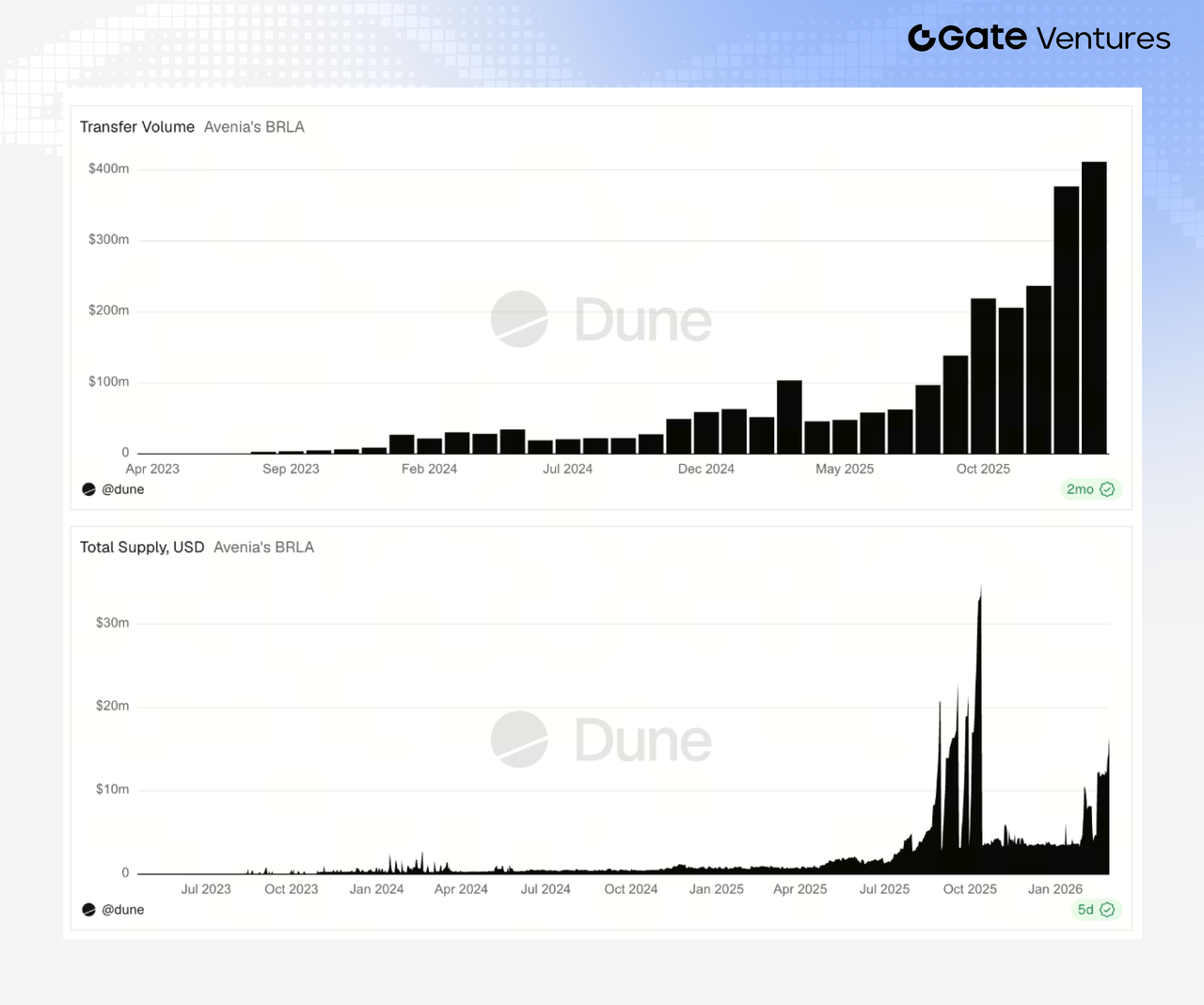
Source: Dune
Therefore, the core value of BRLA is not to provide liquidity for DeFi, but to extend Brazil's local payment efficiency to cross-border and on-chain financial scenarios. As demand for real payments and corporate cash flow increases, BRLA's on-chain transfer volume continues to rise, surpassing $400 million in February 2026.
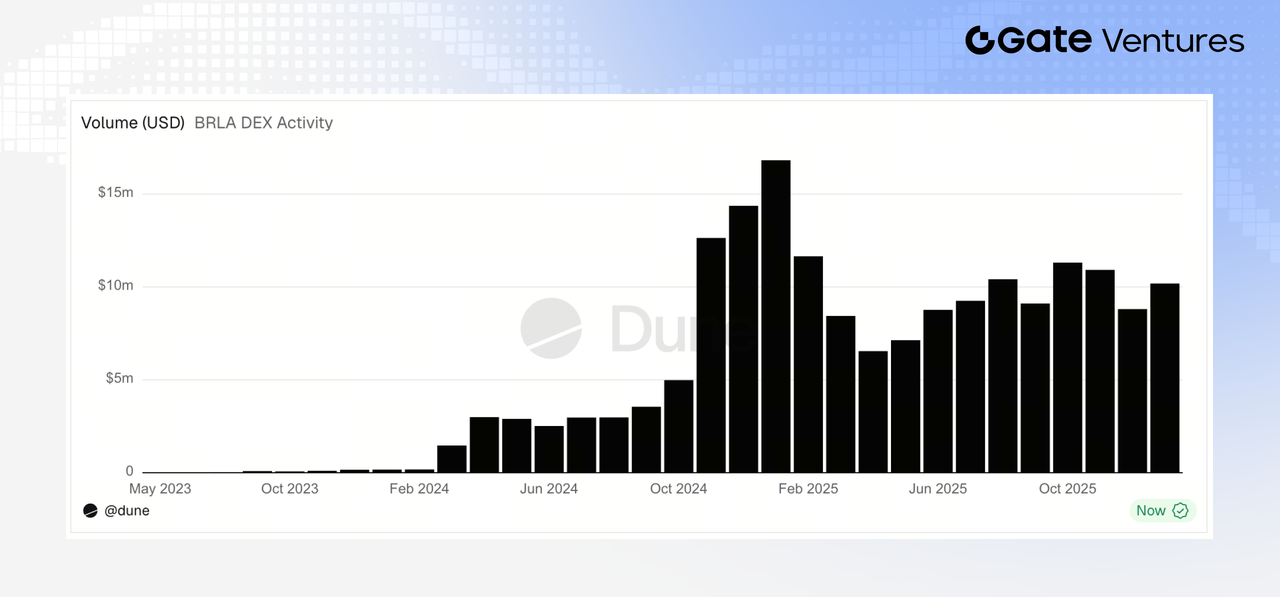
Source: Dune
In addition to payments, BRLA is also becoming an important component of on-chain FX and liquidity management. Its daily average trading volume on DEX is approximately $10 million, a more than 10-fold increase since the beginning of 2024.
BRLA’s FX and Treasury scenarios are also supported by Circle’s programmable FX infrastructure, including StableFX and the emerging Arc ecosystem. As one of the first stablecoins on the Arc public testnet, BRLA can support atomic currency swaps, cross-border remittances, and 24/7 Treasury rebalancing, thereby reducing time delays and intermediary friction in traditional settlement systems.
XSGD
For XSGD, stablecoins serve as a seamless backend settlement layer, compressing the traditionally fragmented, multi-tier cross-border payment process into a unified on-chain liquidity layer, thereby improving efficiency and reducing costs.
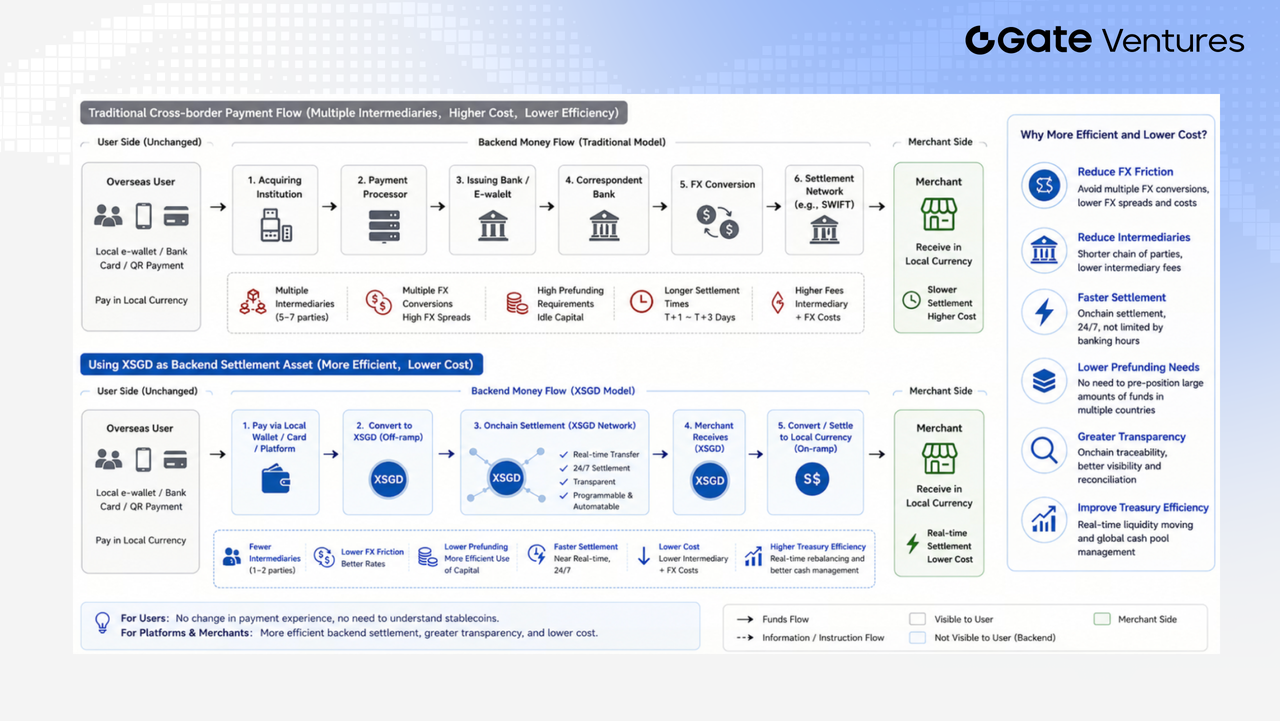
In traditional cross-border payments, even when users pay with a familiar wallet or bank card, the back-end fund flows still often pass through multiple steps including acquiring institutions, issuing banks, payment processors, correspondent banks, and foreign exchange providers. Cross-border funds typically involve multiple currency exchanges, prefunding arrangements, and coordination between banking networks in different countries, which often results in high FX spreads, intermediary fees, and delays.
And when XSGD is used as the backend settlement asset, the user front-end experience can remain unchanged, but the backend fund flow can be directly transferred and settled through the stablecoin network.
For example, after overseas users pay via a local wallet, the payment platform can map the funds to XSGD on the backend, then complete settlement and fund routing through the on-chain network, and ultimately the merchant receives Singapore dollar funds. The entire process reduces the multiple layers of intermediaries and repeated currency exchange steps in the traditional correspondent banking chain.
In the partnership between Grab and Ant International (Alipay+), inbound travelers can continue to use their familiar local wallets and currencies to pay at GrabPay merchants, while merchants can settle in Singapore dollars, avoiding directly bearing FX risk. Here, XSGD acts as a backend settlement asset, not a user-facing payment product.
In the card payment scenario of Chocolate Finance and Visa, users still pay using regular bank cards or debit cards, but the backend can settle in stablecoins via XSGD, allowing users to use Singapore dollar stablecoin liquidity across a wider network of Visa merchants. For users, the experience is similar to traditional payments; for the payment platform and merchants, settlement efficiency and fund transparency are improved.
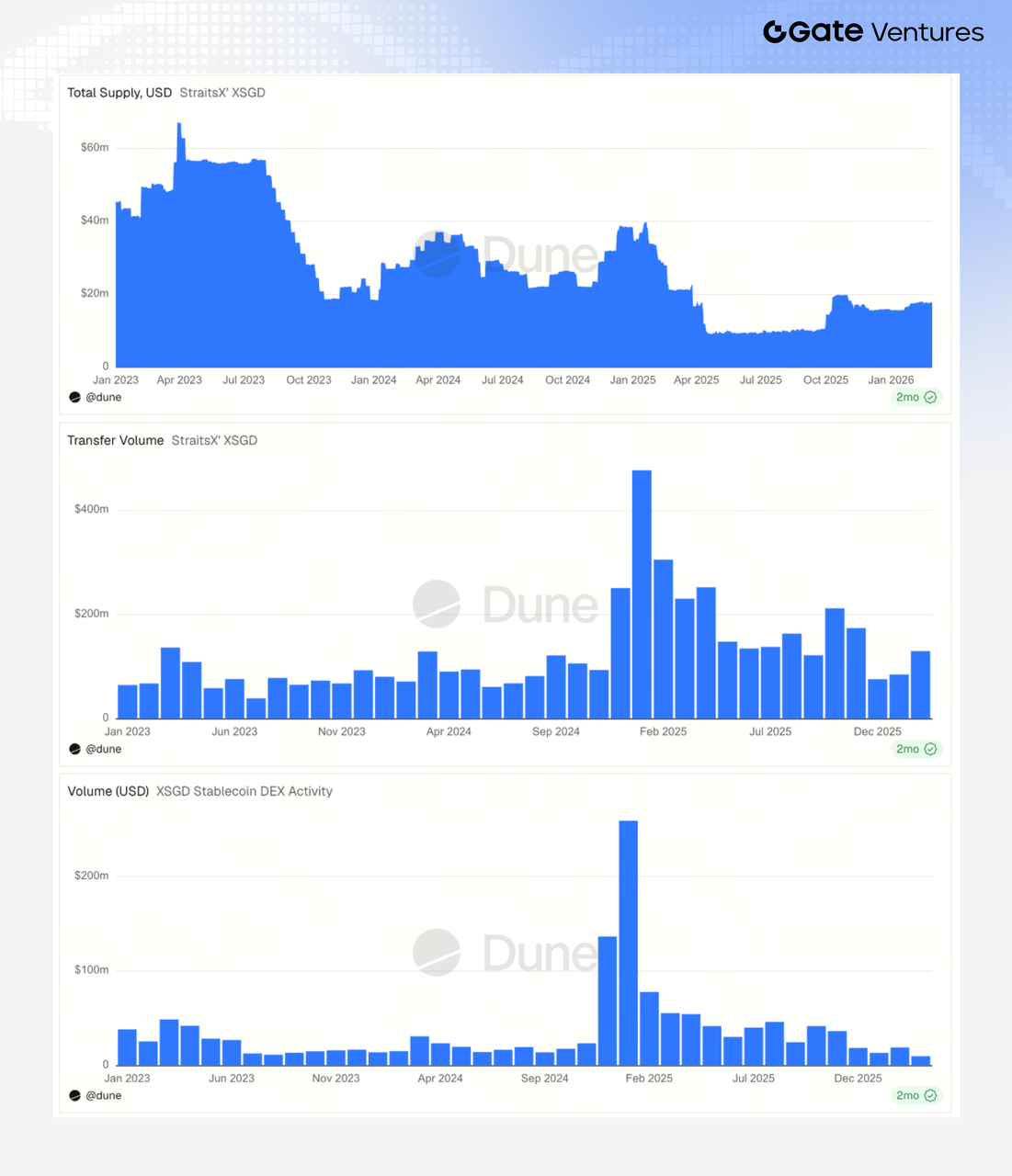
Source: Dune
From a liquidity perspective, XSGD now supports 7×24 on-chain FX, enabling instant swaps between SGD and USD stablecoins by pairing with major USD stablecoins, including StraitsX's XUSD.
The Coinbase listing has further expanded XSGD's compliant institutional-grade distribution channels, and also enhanced XSGD/USDC liquidity and low-cost settlement capabilities on Base, driving its average monthly trading volume to exceed $100 million.
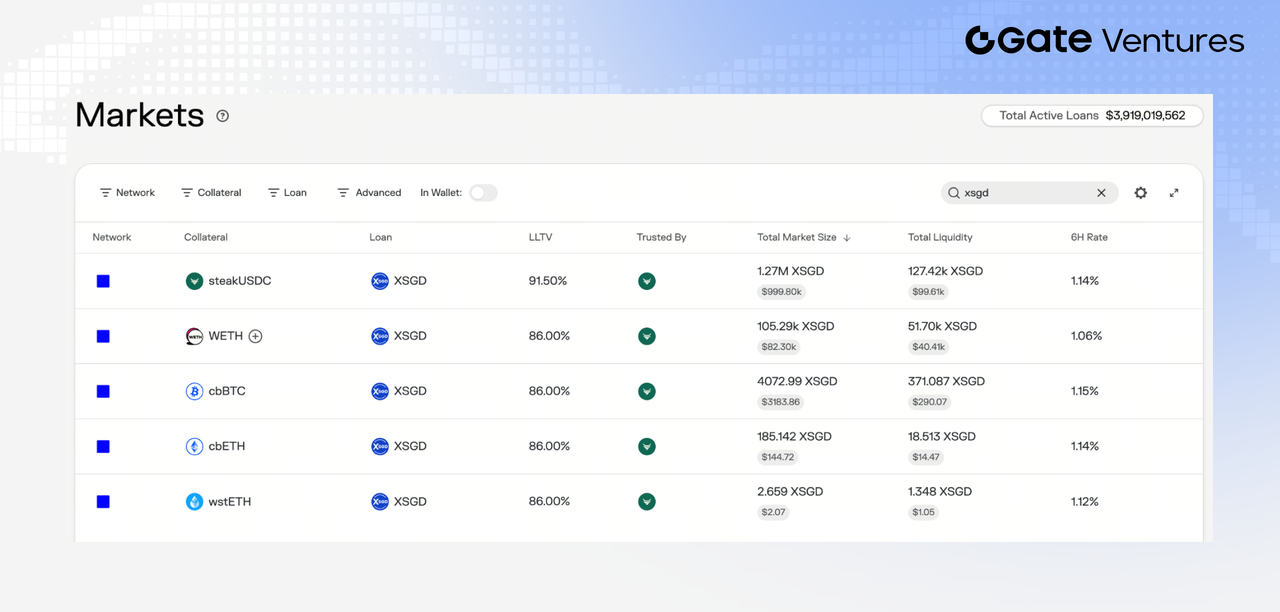
Source: Morpho
On the DEX side, the average monthly trading volume of the XSGD trading pair remains stable between $20 million and $40 million. At the same time, its DeFi integrations are also expanding, such as connecting to the Morpho Vault managed by Steakhouse strategies, allowing users to obtain SGD-denominated returns and collateral strategies without converting to USD.
On-Chain FX
Using stablecoins for cross-border payments essentially depends on on-chain FX. Infrastructure like Circle StableFX is currently attempting to build an institutional-grade on-chain FX venue, but the market has not yet fully taken off, mainly for two reasons:
First, many countries still lack clear stablecoin regulatory frameworks. For instance, South Korea has been exploring a KRW stablecoin via a bank consortium sandbox for years. Similarly, Canada only began opening up a regulatory path that does not rely on excessive securitization more than five years after the launch of QCAD. However, regulation is clearly accelerating, particularly after the passage of the U.S. GENIUS Act and Hong Kong's stablecoin ordinance. Global regulatory certainty for stablecoins is on the rise. (4) (5)
Second, non-USD stablecoin issuers typically need to build infrastructure from scratch, including local banking partnerships, reserve management, mint/redeem channels, and compliance processes. Banking and regulatory environments vary significantly across countries, making implementation challenging.
What on-chain FX truly lacks is not an on-chain trading pool, but a complete set of institutional-grade infrastructure. Circle’s latest launch, StableFX, is essentially building an on-chain version of the FX network.
The core idea is to bring the liquidity, quoting mechanisms, and settlement logic of the traditional FX market onto the chain.
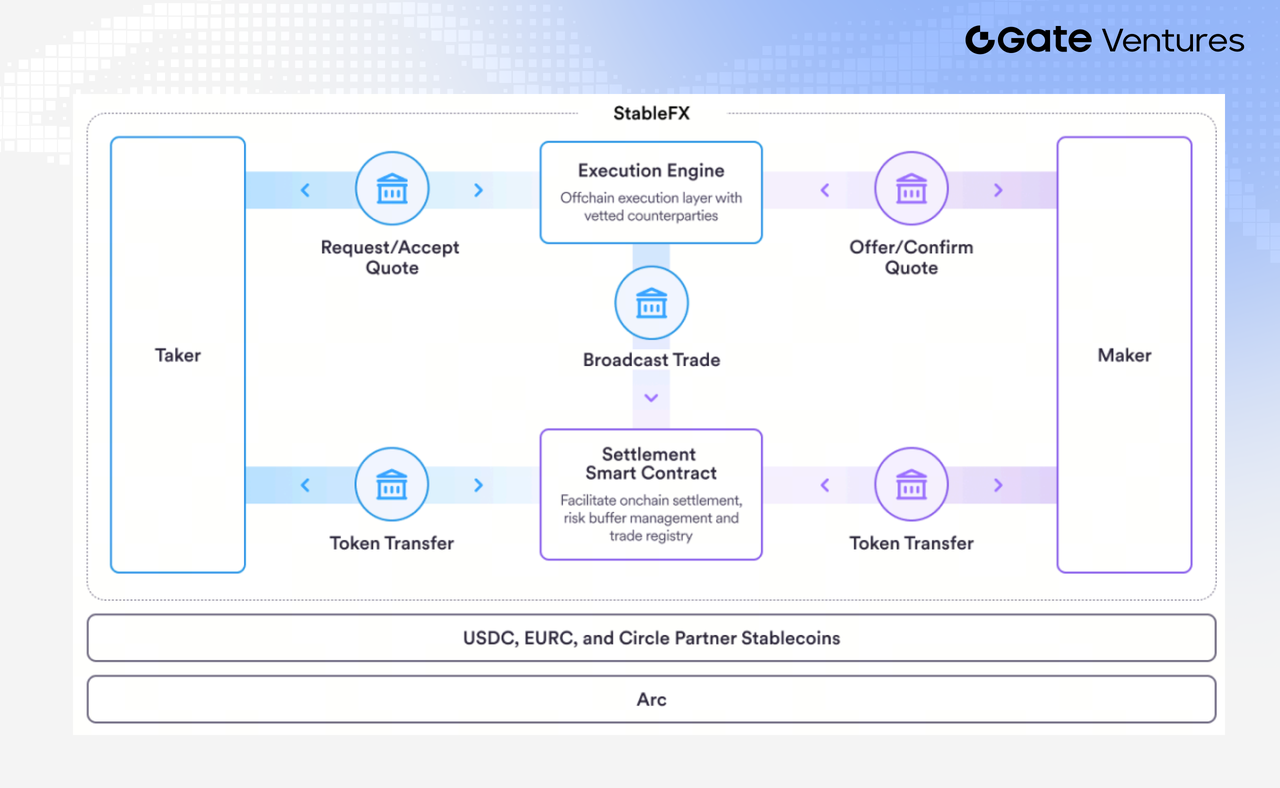
Source: StableFX Litepaper
First, in the liquidity layer, StableFX does not use the traditional AMM model but instead employs the RFQ (Request for Quote) mechanism.
After users submit their swap request, institutional market makers provide an immediate quote. This means liquidity no longer depends on the size of on-chain pools, but can directly tap into traditional FX liquidity sources such as OTC, banks, and Prime Brokers. This model is especially important for non-USD currency pairs like BRL, SGD, and EUR, because on-chain liquidity is often insufficient to support large-scale trades.
Secondly, StableFX aims to solve one of the biggest pain points of traditional cross-border payments: settlement risk. In the past, cross-border FX trades often involved:
A pays first → waits for B to pay → bears counterparty risk
StableFX introduces an on-chain PvP settlement mechanism, using smart contracts to hold funds. The settlement is executed only when both parties complete delivery; otherwise, the trade is automatically canceled. In other words, it attempts to bring the logic of traditional CLS (Continuous Linked Settlement) onto the chain.
Additionally, Circle has also introduced the Partner Stablecoin mechanism, aiming to incorporate local stablecoin issuers into a unified framework. Integrating parties need to satisfy:
Local Regulatory License
1:1 High-Quality Reserve Assets
Auto Mint/Redeem
Bank Connection
Regular Audit and Compliance Requirements
In the future, if local stablecoins such as HKD, BRL, and SGD are integrated, more FX trading corridors can be gradually established.
However, this model still faces challenges. If on-chain FX deviates in price from the traditional FX market, it may attract arbitrage capital and create toxic flow. If market makers cannot hedge in time, they may widen the spread, reduce quoting frequency, or even suspend quoting.
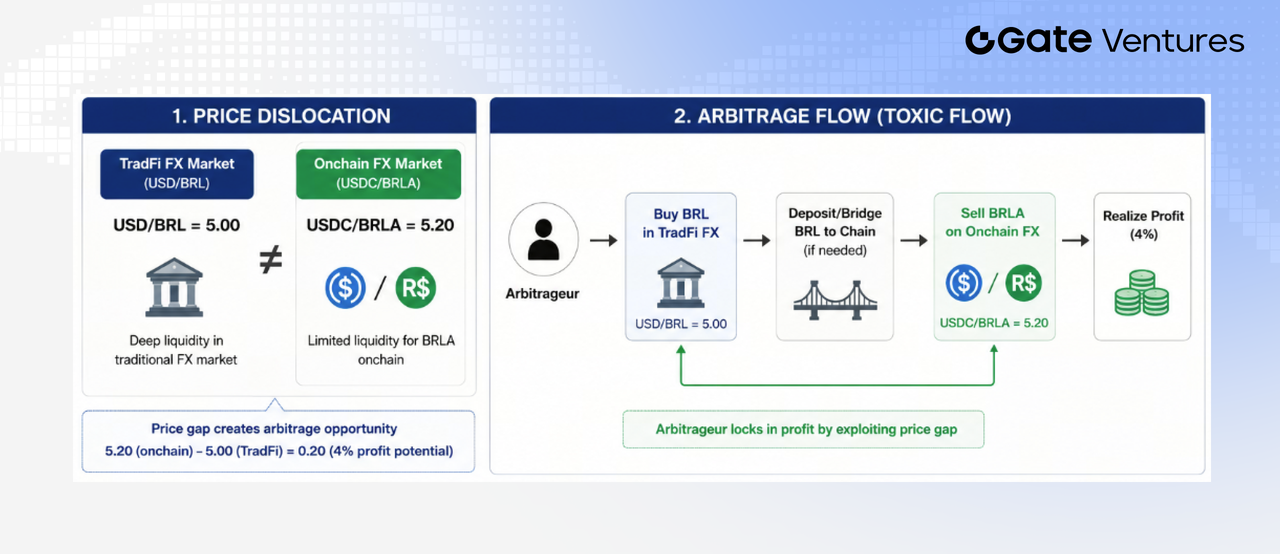
For example, consider the traditional FX market: USD/BRL = 5.00
But on-chain, due to insufficient liquidity of BRLA: USDC/BRLA = 5.20
Arbitrageurs can: Buy BRL on TradFi → Sell BRLA on-chain → Earn the spread
If the market maker’s hedging speed is not fast enough, or BRLA inventory is insufficient, the market maker will be continuously harvested by arbitrage funds.
As a result, market makers begin to: widen the spread → reduce quoting → reduce liquidity provision
Ultimately, the phenomenon observed in the market may be: widening price spreads, decreasing depth, and even a situation where "quotes exist but cannot be filled" during periods of volatility.
Therefore, the core challenge of on-chain FX is not just whether liquidity exists, but how to effectively connect TradFi liquidity, risk management, and on-chain settlement. This also raises a key question:
If on-chain liquidity is insufficient, why can't we directly and instantly issue more Stablecoins?
Theoretically possible, but in reality, Mint is not a purely on-chain action. Taking EURC as an example, new issuance typically still requires institutions to complete KYC, submit funds through a Circle Mint account, and transfer euros to the issuer's account via bank wire/SEPA. Only after fund settlement is complete will the issuer mint the corresponding amount of EURC on-chain.
So market makers cannot simply "replenish out of thin air" the moment a trade occurs. Instead, they commonly hold inventory in advance, hedge risks instantly through the traditional FX market, and then replenish stablecoin inventory later through banks and issuer channels.
Source: BIS
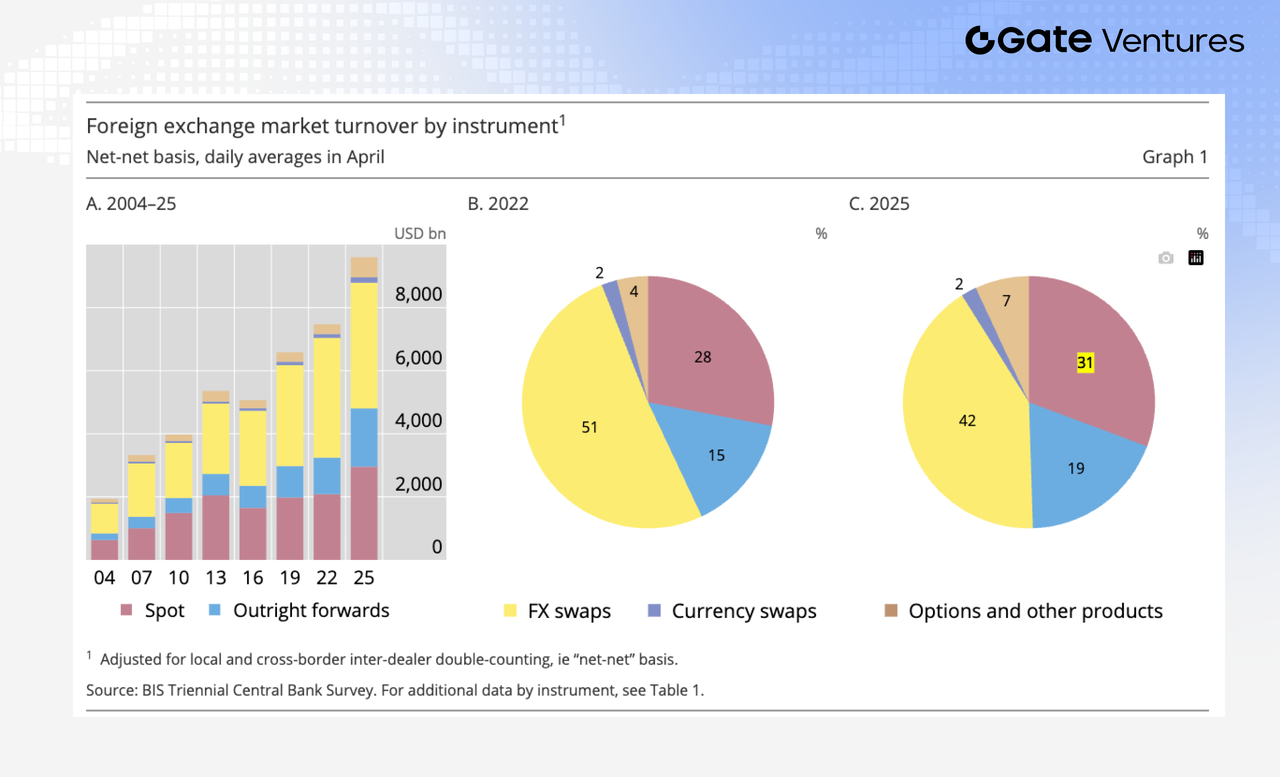
However, future on-chain FX may not necessarily rely on spot-local stablecoins. According to BIS data, about 31% of global FX market trades come from spot transactions, while about 69% come from derivative instruments such as FX swaps, forwards, and options. This means the modern FX market is more about transferring exchange rate risk rather than necessarily relying on actual currency delivery. (7)
This means that on-chain FX may also develop a synthetic FX model in addition to Spot FX paths like USDC ↔ EURC/BRLA:
Users continue to hold USDC/USDT at the underlying level, gain exposure to local currencies such as EUR, BRL, CHF, SGD through NDFs (Non-Deliverable Forwards), with account balances denominated in the local currency, while the underlying remains settled in USD stablecoins.
The advantage of this model is that it retains deep liquidity for USDT/USDC without needing to re-establish spot liquidity for each local stablecoin, while also reducing dependence on local banks, reserve assets, and Mint/Redeem infrastructure. Therefore, the future of on-chain FX may see two parallel paths: one is Spot FX for real payments and local settlement, and the other is Synthetic FX for multi-currency accounts, treasury management, and risk hedging.
Outlook
The growth trend of stablecoins as a medium for payment and value transfer has become increasingly clear. To truly achieve scale, local currency stablecoins and on-chain FX are likely an inevitable step.
This trend is already emerging in Latin America. More and more crypto neobanks are connecting local currencies, stablecoins, and local payment networks. For example, in the Brazilian and Argentine markets, the following has already appeared:
USDC ↔ BRLA/USDC ↔ PEZO
Such local currency conversion scenarios and further integration with local payment systems:
BRLA → PIX → Brazilian Bank Account
For users, the experience is: USD stablecoin → local currency → local payment
But the underlying reality is: on-chain FX → local stablecoins → local payment rails
If regulatory frameworks continue to improve, market maker liquidity matures gradually, and infrastructure like Circle StableFX connects more local currency corridors, the long-term opportunity for on-chain FX is not just to serve Crypto Trading, but to become part of the global cross-border payment infrastructure.
https://www.ledgerinsights.com/hana-bank-stablecoin-consortium/
https://coingeek.com/qcad-receives-green-light-as-canada-first-regulated-stablecoin/
https://6778953.fs1.hubspotusercontent-na1.net/hubfs/6778953/StableFX-Litepaper_2025.pdf
https://www.bis.org/statistics/rpfx25_fx.htm?utm_source=chatgpt.com


