A defining characteristic of the semiconductor industry is that chip manufacturing depends not only on fabs and equipment manufacturers but also on a complex materials supply chain. Material stability, heat resistance, and high purity directly affect the quality of chip production.
DuPont's Electronic Materials Business spans multiple areas, including wafer fabrication, packaging, circuit manufacturing, and industrial electronics. The importance of the electronic materials industry continues to grow alongside the development of advanced packaging and high-performance chips.
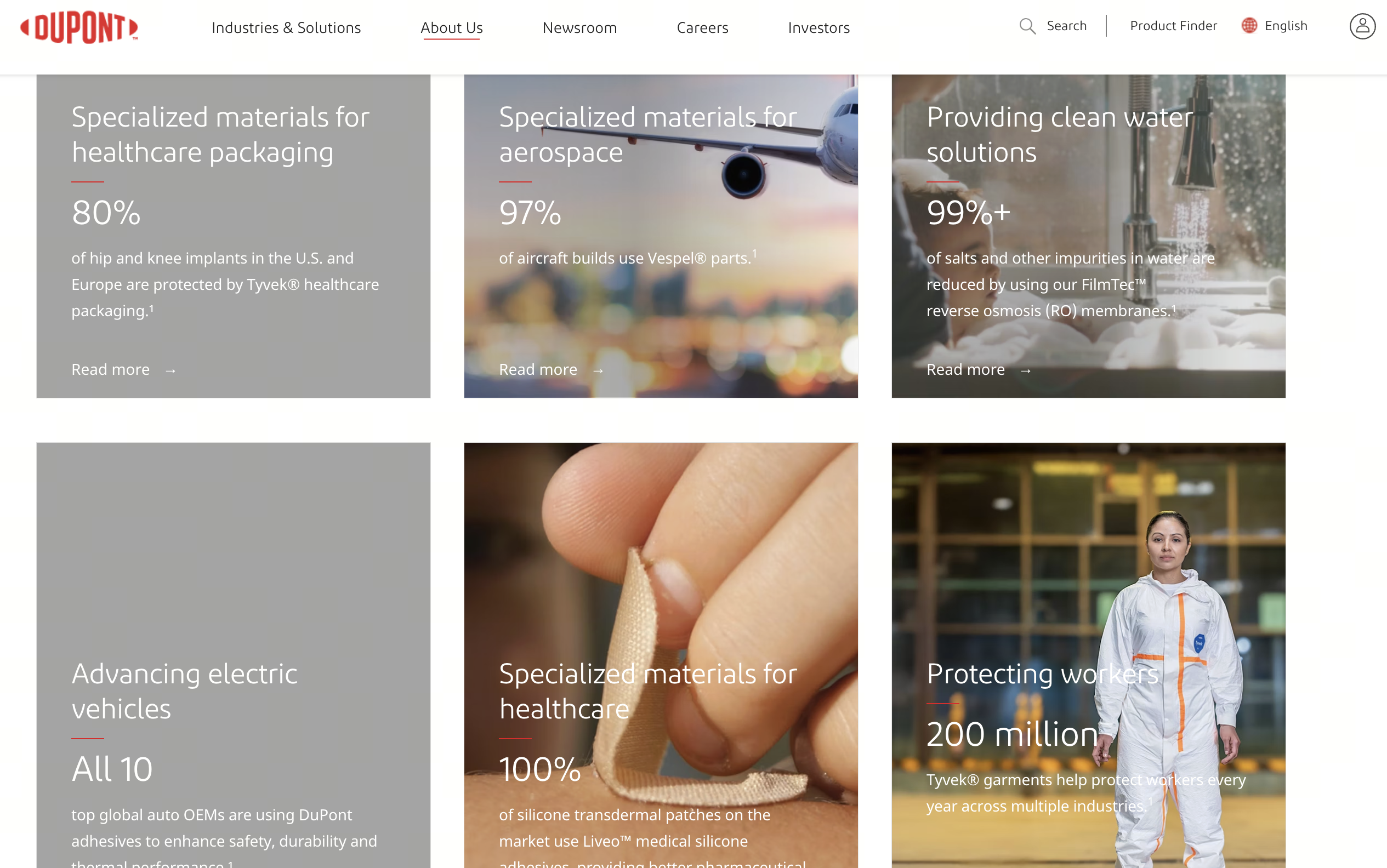
Source: dupont.com
DuPont's Role in the Semiconductor Value Chain
DuPont occupies a position closer to the "foundational support layer" in the semiconductor value chain. Since chip manufacturing demands the coordination of numerous material systems, electronic materials companies have become an integral part of the semiconductor industry.
The semiconductor value chain typically includes chip design, wafer fabrication, packaging and testing, and electronics manufacturing. Each stage imposes extremely high requirements on material performance.
DuPont engages in these processes primarily through its electronic materials. Some materials are used for insulation and circuit interconnect, while others support packaging and industrial manufacturing.
Structurally, the key value of DuPont's Electronic Materials business lies in helping the chip manufacturing system maintain stability. High-performance chips require not only advanced equipment but also a long-term, stable supply of materials.
The relationship between DuPont and the semiconductor industry also highlights a key characteristic of the materials technology sector: while materials companies do not directly sell consumer electronics, they have a profound impact on the entire electronics manufacturing ecosystem.
Why Chip Manufacturing Requires Electronic Materials
Chip manufacturing requires electronic materials because semiconductor production demands extreme purity, stability, and heat resistance. Many chip manufacturing processes cannot be accomplished with mechanical equipment alone.
First, wafer fabrication requires high-purity electronic materials to support the processing steps. Certain materials are involved in insulation, cleaning, and the formation of conductive structures.
Second, the internal structure of the chip needs stable interconnect capabilities. Electronic materials affect circuit reliability and long-term operational stability.
Next, the advanced packaging stage requires materials that can withstand high temperatures and maintain high stability. High-performance chips often require complex packaging structures, making packaging materials increasingly critical.
Finally, electronic materials directly impact chip yield. The semiconductor industry has an extremely low tolerance for manufacturing errors, so material stability is a foundational element of chip production.
The following table illustrates some of the roles electronic materials play in chip manufacturing:
| Chip Manufacturing Stage |
Role of Electronic Materials |
Primary Goal |
| Wafer Processing |
Enhance purity and stability |
Reduce defects |
| Circuit Manufacturing |
Provide insulation |
Improve reliability |
| Chip Packaging |
Strengthen interconnect structures |
Enhance durability |
| Industrial Production |
Stabilize the manufacturing process |
Improve yield |
The importance of the electronic materials industry continues to rise with the advancement of leading-edge process nodes and high-performance computing. The more complex the chip architecture, the greater the importance of the material system.
How DuPont Semiconductor Materials Enter Wafer Fabrication
The core logic behind DuPont's semiconductor materials entering the wafer fabrication process is long-term material validation and industry certification. The semiconductor industry rarely changes material suppliers frequently.
First, DuPont develops electronic materials tailored to wafer fabrication requirements. Different manufacturing stages have varying demands for purity, heat resistance, and stability.
Second, semiconductor manufacturers conduct extensive, long-term testing of these materials. Fabs typically need to verify material performance under high-temperature, high-pressure, and complex manufacturing conditions.
Next, materials that pass validation move into actual production. Some DuPont electronic materials are used in wafer processing, insulation, and circuit manufacturing steps.
Finally, the material supply system forms a long-term partnership with the fab. Because chip manufacturing demands exceptional stability, mature material systems are typically maintained for extended periods.
A key strength of DuPont's electronic materials is their ability to adapt to highly complex manufacturing processes. As advanced nodes impose ever-tighter precision requirements on materials, companies are driven to continuously upgrade their R&D capabilities.
What Support Does DuPont Provide in Lithography and Packaging?
DuPont's role in lithography and packaging is primarily focused on electronic materials, adhesive materials, and industrial stability support. Advanced chip manufacturing places ever-higher demands on packaging structures.
The lithography stage requires a highly stable material environment. With an extremely low tolerance for contamination and errors, the manufacturing process relies on high-purity material systems.
Next, the chip packaging stage demands coordination between interconnect materials and insulation materials. Advanced packaging technologies often involve complex stacked architectures, so material stability directly influences chip performance.
Then, electronic adhesive materials are used in chip bonding and thermal management. Some materials must simultaneously meet heat resistance and conductive stability requirements.
Finally, packaged chips must also maintain long-term operational stability. The rising power consumption of high-performance computing and AI chips further elevates the importance of packaging materials.
DuPont's key contribution in the packaging materials space is helping chips achieve greater durability and stability. The ongoing trend toward advanced packaging continues to expand the electronic materials market.
How DuPont Materials Affect Chip Yield and Stability
DuPont materials have a significant impact on chip yield, primarily through manufacturing stability and long-term reliability. The semiconductor industry's stringent error tolerance means material performance directly determines chip quality.
First, high-purity electronic materials reduce the risk of manufacturing contamination. Even microscopic impurities during wafer fabrication can compromise chip operation.
Second, insulation materials affect circuit stability. High-performance chips have dense internal structures, making insulation capability critical for reliability.
Next, packaging materials influence heat dissipation and interconnect stability. As advanced chips consume more power, thermal management becomes a key factor.
Finally, a stable material system helps fabs improve yield. Higher chip yield typically translates to lower production costs for semiconductor companies.
The following table summarizes how material capabilities affect chip manufacturing:
| Material Capability |
Impact on Chip |
Outcome |
| High Purity |
Reduces contamination |
Improves yield |
| Insulation |
Stabilizes circuits |
Improves reliability |
| Heat Resistance |
Optimizes heat dissipation |
Extends lifespan |
| Adhesive Stability |
Strengthens interconnects |
Reduces failures |
The real value of DuPont materials is not limited to the performance of a single product; rather, it lies in helping the entire chip manufacturing system maintain long-term stable operation.
How Semiconductor Industry Upgrades Affect DuPont's Business
The ongoing upgrade of the semiconductor industry continues to drive demand for electronic materials. The more complex the chip architecture, the greater the reliance on advanced material systems.
The rise of leading-edge process nodes and AI chips has elevated the importance of packaging technology. High-performance chips require more sophisticated interconnect structures, fueling growth in the packaging materials market.
New energy vehicles and data centers are also boosting semiconductor demand. Automotive electronics, servers, and high-performance computing systems require a large volume of highly stable chips.
From a value-chain perspective, semiconductor upgrades benefit not only chip design companies but also drive expansion in the electronic materials industry. As a supplier of electronic materials, DuPont is well positioned to participate in this upgrade cycle.
However, the semiconductor industry is also subject to cyclical fluctuations. Changes in consumer electronics demand, global manufacturing cycles, and inventory adjustments can all affect the revenue performance of materials companies.
A major advantage of DuPont's Electronic Materials business is its coverage across multiple industrial sectors. Beyond chip manufacturing, demand from industrial electronics and advanced manufacturing also provides support.
What Are the Application Scenarios for DuPont Electronic Materials?
DuPont electronic materials are primarily applied in consumer electronics, industrial electronics, automotive electronics, and high-performance computing. Different industries have distinct material requirements.
The consumer electronics industry needs highly reliable circuit materials. Smartphones, tablets, and wearable devices all depend on stable electronic material systems.
As automotive electronics become a key growth area, demand for heat-resistant and highly stable materials continues to rise. Smart vehicles and autonomous driving systems require long-term operational reliability.
Data centers and AI computing are also driving demand for high-performance chips. The rising power consumption of server chips increases the importance of packaging and thermal management materials.
Industrial automation is another critical application for DuPont electronic materials. Industrial equipment typically requires long operational lifetimes, making material stability essential.
A key strength of DuPont's Electronic Materials business is its ability to serve multiple high-end manufacturing industries simultaneously. The growth of semiconductors, AI, new energy, and industrial automation will all drive demand for advanced materials.
Summary
DuPont (DD) is deeply embedded in the global semiconductor value chain through its electronic materials, packaging materials, and industrial manufacturing support. Although DuPont does not directly produce chips, many wafer fabrication, packaging, and electronics manufacturing processes depend on high-performance material systems.
The development of leading-edge process nodes, AI chips, and advanced packaging continues to elevate the importance of the electronic materials industry. Material stability, heat resistance, and high purity are increasingly becoming foundational elements of chip manufacturing.
The essential value of DuPont's Electronic Materials business lies in helping the entire semiconductor manufacturing system maintain long-term stable operation and supporting the continuous advancement of the high-tech electronics industry.
FAQ
What is the relationship between DuPont (DD) and the semiconductor industry?
DuPont (DD) participates in the semiconductor value chain primarily through electronic materials, packaging materials, and industrial manufacturing support. Some of its materials are used in wafer fabrication and chip packaging processes.
Why does chip manufacturing require electronic materials?
Chip manufacturing requires electronic materials because semiconductor production demands extremely high purity, insulation capability, heat resistance, and manufacturing stability.
Does DuPont directly produce chips?
DuPont does not directly design or manufacture chips. Its core role is to provide electronic materials and industrial support to chip manufacturing companies.
How do DuPont electronic materials affect chip yield?
High-purity, highly stable electronic materials reduce manufacturing errors and contamination risks, directly impacting chip yield and long-term reliability.
In which fields are DuPont electronic materials mainly used?
DuPont electronic materials are primarily used in consumer electronics, automotive electronics, industrial automation, data centers, and high-performance computing.