As AI, the data economy, and Web3 infrastructure evolve, privacy computing has emerged as a major blockchain sector. More companies want to leverage data for value creation without exposing sensitive information. This has brought attention to encrypted computing networks that enable data to be "available but not visible." Unlike traditional public chain tokens focused on transactions and payments, ARX derives its value from computing demand, data collaboration, and the expanding privacy protection market.
From an industry standpoint, competition among privacy computing networks hinges not only on technology but also on whether the economic model can generate a sustainable growth flywheel. Only when users pay for computations, nodes reliably provide resources, and developers build applications can the network achieve meaningful scale. Thus, the ARX tokenomics are critical to both operational efficiency and Arcium's long-term competitiveness in the data-driven economy.
Core Functions and Uses of the ARX Token
Within the Arcium network, ARX is far more than a medium of exchange—it is the foundational asset powering the entire encrypted computing ecosystem. Its design shares similarities with traditional Gas Tokens but adds specialized features for privacy computing.
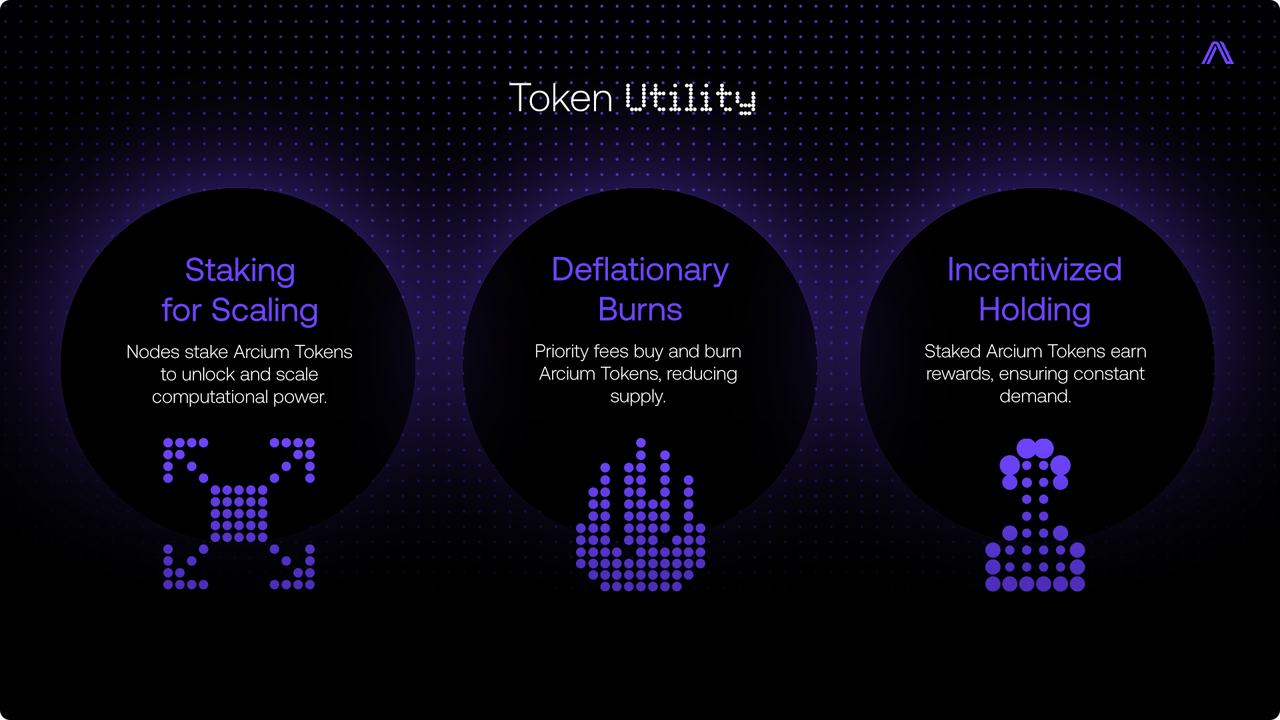
ARX serves as the payment method for network computing resources. Users must pay ARX fees when submitting Multi-Party Computation (MPC) tasks, accessing privacy computing services, or running encrypted inference models. Computing nodes earn rewards by executing these tasks, creating a supply-and-demand dynamic.
ARX is also a vital tool for network security. Nodes participating in computing services typically stake a certain amount of ARX as collateral. Malicious behavior—such as providing incorrect results, refusing tasks, or attempting to compromise the network—can trigger slashing of staked assets.
Additionally, ARX fuels ecosystem incentives. Developers building applications, contributing tools, optimizing protocols, and driving ecosystem growth are rewarded with ARX. This attracts more developers to the Arcium ecosystem, fostering a positive feedback loop.
ARX Token Distribution and Release Mechanism
Token distribution often shapes a project's ecosystem development trajectory for years. For infrastructure projects, a well-balanced allocation supports network security, developer incentives, and long-term ecosystem health.
The ARX token distribution comprises the following components:
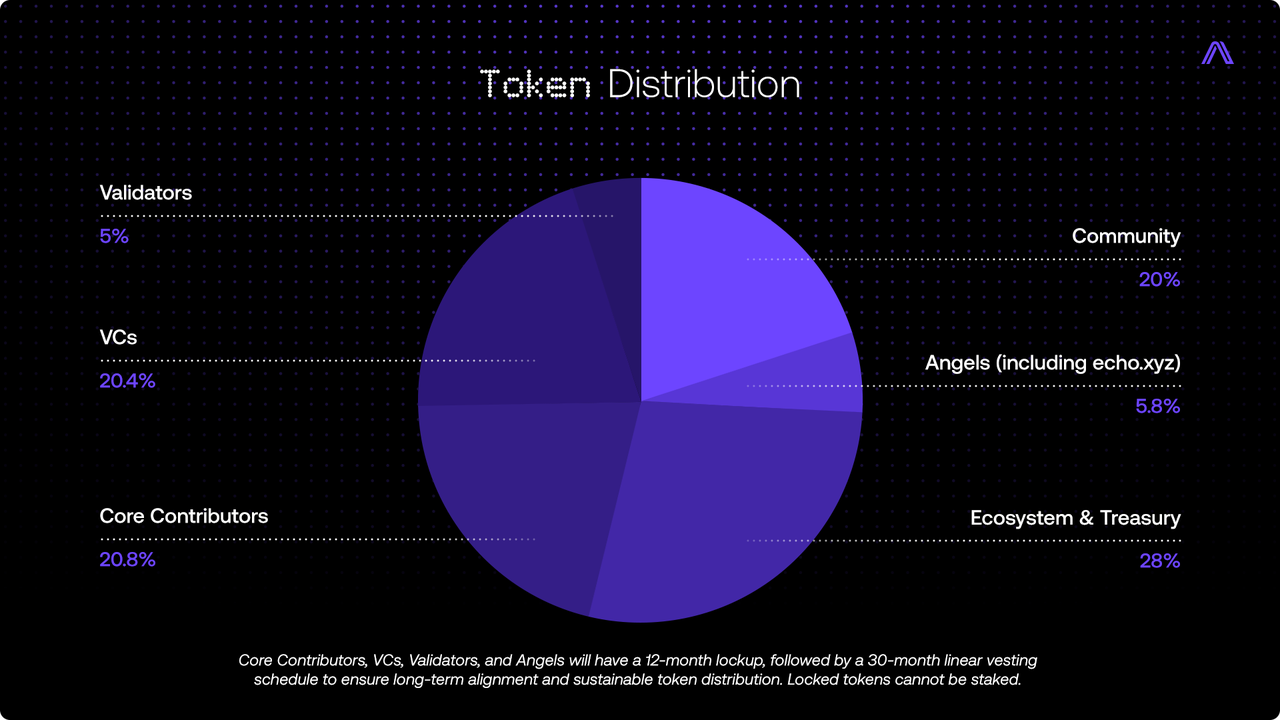
For ARX, market attention centers not only on initial allocation ratios but critically on the release schedule. Rapid short-term unlocks can strain market liquidity, while excessively long release periods may dampen incentive efficiency. A model featuring long-term lock-ups, phased unlocks, and alignment with ecosystem growth is generally viewed as healthier for infrastructure projects.
How ARX Incentivizes Computing Nodes to Participate in the Network
A privacy computing network is essentially a resource marketplace. Sufficient nodes must provide computing power to handle user tasks, making node incentives a cornerstone of Arcium's scalability.
When a user initiates a computing request, the network distributes the task across multiple nodes for collaborative execution. Upon completion, nodes receive ARX rewards, with amounts tied to task complexity, resource consumption, and network demand.
This model differs markedly from traditional cloud computing, which relies on centralized data centers. Arcium instead aggregates global computing resources via a decentralized network. More nodes enhance security; more tasks boost node revenue; higher revenue attracts additional nodes.
Economically, ARX's incentive model seeks to build a classic two-sided market: users and enterprises requiring privacy computing on one side, and node operators supplying computing resources on the other. ARX acts as the value bridge between them.
The Role of ARX in the Governance System
As the network scales, protocol upgrades, parameter adjustments, and ecosystem fund allocation require coordinated governance. ARX fulfills the role of a governance token in this process.
Holders can vote on key protocol matters, including network parameter changes, fee structure optimization, new feature launches, and ecosystem fund allocation. Through this mechanism, Arcium aims to gradually shift decision-making from the core team to the community.
A robust governance system enhances long-term network sustainability. For infrastructure projects, technology cycles often span years or more. Relying on a single entity for all decisions introduces centralization risks, whereas token governance fosters a more open development model.
However, governance effectiveness depends on token distribution. If governance power is overly concentrated, community participation may lose its value. Thus, governance design is a key metric for assessing ARX's long-term potential.
How ARX Captures Protocol Value
Many crypto projects face a paradox: protocol usage grows, but token value does not necessarily follow. This makes value capture a critical measure of tokenomics.
ARX's value capture logic is rooted in network computing demand. As more users and institutions leverage Arcium's privacy computing services, they must continually pay ARX fees. Rising computing demand increases the token's circulation frequency and usage scale within the ecosystem.
Long-term value capture comes from three primary sources:
- Growth in privacy computing tasks
- Increased enterprise data collaboration needs
- Expansion of the AI model training and inference market
If Arcium becomes a key provider of privacy computing infrastructure, the economic activity generated by the network will sustain real demand for ARX.
Compared to sentiment-driven token models, value grounded in genuine computing demand is generally viewed as more sustainable.
Key Factors Influencing ARX Token Value
ARX's market performance depends on more than just the broader crypto environment—several fundamental factors play a role.
Network adoption rate. The more applications built on Arcium, the stronger the theoretical demand for ARX. Enterprise users and AI applications could become major growth catalysts.
Privacy computing industry velocity. Technologies like MPC, ZKP, and FHE are still evolving rapidly. If privacy computing becomes mainstream infrastructure, related projects could see significant expansion.
Ecosystem developer count. Developers determine the richness of the application ecosystem and serve as a key indicator of activity for public chains and infrastructure projects.
Additionally, market liquidity, token release schedules, macroeconomic conditions, and shifts in crypto risk appetite all influence ARX's price.
Risks to Consider When Investing in ARX
While privacy computing is seen as a key Web3 direction, ARX faces multiple uncertainties.
Technology risk: MPC network architecture is complex, and large-scale commercial deployment requires ongoing validation. Performance shortfalls relative to enterprise needs could slow ecosystem growth.
Competition risk: The privacy computing space is crowded, with projects pursuing Zero-Knowledge Proofs, Fully Homomorphic Encryption, Trusted Execution Environments, and other routes. The future market structure remains highly fluid.
Ecosystem risk: The value of infrastructure projects ultimately hinges on application count and actual usage. If developer growth disappoints, network demand may fail to achieve scale.
As a crypto asset, ARX is also subject to market volatility, regulatory changes, and macroeconomic factors. Investors should understand its long-term value thesis rather than fixating on short-term price swings.
Long-Term Development Potential of the ARX Ecosystem
From an industry trend perspective, data is becoming the most important factor of production in the digital economy. Yet the tension between data value release and privacy protection persists. Enabling data to participate in collaboration while remaining secure is a pressing global tech challenge.
Arcium directly addresses this opportunity. As AI model training surges, enterprise data collaboration expands, and Web3 applications target institutional markets, encrypted computing networks could become a cornerstone of digital infrastructure.
If Arcium succeeds in building a developer ecosystem, scaling its node network, and attracting enterprise users, its network effects will strengthen. In that scenario, ARX evolves from a functional network token into a vital medium connecting data, computation, and value exchange.
The entire privacy computing track remains in its early stages. Despite fierce competition, the addressable market is vast. As real-world use cases increasingly prioritize data security and trusted collaboration, the strategic value of privacy computing infrastructure is likely to rise.
Conclusion
ARX is the core economic medium of the Arcium privacy computing network, spanning computing resource payments, node incentives, governance participation, and protocol value capture. Compared to traditional public chain tokens, ARX is more dependent on genuine computing demand and data collaboration scenarios. Its long-term value is tightly linked to network usage, developer ecosystem health, and enterprise adoption.
Against the backdrop of rapid AI and data economy growth, privacy computing is transitioning from concept to practical application. Arcium aims to build next-generation data collaboration infrastructure using MPC technology and a decentralized computing network, with ARX as a key component supporting the ecosystem. Its future growth will depend on technological execution, ecosystem expansion speed, and the overall development of the privacy computing market.